
Exploring the issues that affect our rivers, lakes and ground water.
(photo credit Len Hyke)
Exploring the issues that affect our rivers, lakes and ground water.
(photo credit Len Hyke)

OCCWA advocates non-partisan responsible representation at the local and state government levels for protecting our greatest in the Northwoods: our pristine waters, wetlands, forests and clean air.
This OCCWA website serves as your resource for news about environmental issues that impact Oneida County in northern Wisconsin.
(Photo Credit Len Hyke)

While working in the Nicolet National Forest in 2014-15, I had the interesting task of surveying local bat populations. We carried out bat mist-netting to record measurements (size, weight, gender) and tag individual bats. We also recorded bat echolocation sounds over prescribed routes through the forest to gather information on populations and species. With Halloween approaching, it’s a perfect time to take a closer look at these fascinating mammals.
Bat Week (October 24–31) is an annual international celebration raising awareness about bat conservation. Did you know that bats play a vital role in healthy ecosystems? They do this by eating a variety of insects (including mosquitos!), pollinating flowers, and spreading plant and tree seeds. A single bat can consume up to its body weight in insects each night, helping protect crops and forests from pests. Their hunting of flying insects is also beneficial as mosquito-borne diseases become more prevalent in the US.
Bats of Wisconsin
Wisconsin is home to eight bat species. Four are cave bats that hibernate in caves and mineshafts throughout the winter. These close quarters increase their risk of exposure to White Nose Syndrome, a devastating fungal disease. All four cave bat species are currently listed as State Threatened because of this disease. However, there is some good news: for the third year in a row, Wisconsin’s cave bat populations appear to be increasing. The other four species are tree bats that migrate south for the winter. Because they do not hibernate in confined spaces, their risk of exposure to the disease is minimal.
More Fascinating Bat Facts
Provided by Dr. Amy Schultz October 26, 2026-
UW RIPPLE Study Preparing to Launch Appointments in January
The University of Wisconsin–Madison has received more than $3 million from the National Institute of Environmental Health Sciences, part of the National Institutes of Health, for the RIPPLE study in Stella and the surrounding area. RIPPLE stands for the Rural Investigation of PFAS Pathways and Long-term hEalth study, led by Amy Schultz, a senior scientist and environmental epidemiologist. Over the next four to five years, researchers will investigate how PFAS in drinking water, locally grown and harvested foods, soil, air and dust contribute to PFAS levels in residents’ blood, and how those levels relate to cholesterol and other blood lipids. The goal is to provide evidence that can inform efforts to reduce exposure and protect health.
The study team is working toward beginning appointments in January 2027. Households selected for recruitment will receive mailed invitations with instructions for checking eligibility and scheduling an appointment. Participation will include a questionnaire, a visit at Stella Town Hall for blood and urine collection and health measurements, and a follow-up visit approximately two years later. The study will also collect drinking-water samples and, for some households, additional soil, food, or dust samples. Participants will receive individual test results, and the team will share study updates and overall findings with the community.
Community members can help guide the research by joining the Community Advisory Board (CAB). These are paid positions, and the short application is available through the study website until November 3, 2026. Please consider applying! The commitment is about 40 hours/year to attend monthly meetings and review study materials. The team will also be recruiting local phlebotomists to conduct study appointments. Watch for upcoming job postings.
Learn more, apply for the advisory board, and follow the study’s progress at uwripplestudy.pophealth.wisc.edu. For updates and announcements, follow UW Ripple Study on Facebook.
Frequenty asked questions
What is the Ripple study trying to learn?
The RIPPLE Study will examine how PFAS in the Stella area are getting into people’s bodies and whether PFAS exposure is associated with cholesterol and other blood lipids.
We will measure PFAS in blood of residents and in possible environmental sources, including private-well water. In selected households, we will also test locally grown or harvested foods, fish, deer meat, soil, air and household dust. We will ask participants to complete the study twice, two years apart. By studying participants twice we can examine how PFAS levels and blood lipids change over time.
Who is running the study?
The principal investigator in charge of the RIPPLE Study is Dr. Amy Schultz, an environmental epidemiologist and senior scientist at the University of Wisconsin–Madison. There are also other co-investigators at UW Madison (see our Team page) that are leading or advising on certain parts of the study.
In addition, we have community and governmental partners that will inform the study. They include Oneida County Health Department, Oneida County Clean Waters Action (OCCWA), the RIPPLE Community Advisory Board (CAB), and the RIPPLE Governmental Advisory Board (GAB) which includes representatives from the Wisconsin Department of Natural Resources (DNR) and the Wisconsin Department of Health Services (DHS).
Who is funding the study?
The study is funded by the National Institute of Environmental Health Sciences (NIEHS). NIEHS is a branch of the National Institutes of Health (NIH) under the federal Department of Health and Human Services.
What will participants be asked to do?
Participants will attend a study appointment at the Stella Town Hall. During the appointment, study staff will collect a blood and urine sample, and measure blood pressure, height and weight. Participants will also be asked to complete a questionnaire about their diet, drinking water, recreational activities, household characteristics and other possible sources of PFAS exposure.
The study team will also arrange to collect a drinking-water sample from the participant’s household. Some households may be invited to provide additional environmental or food samples.
Participants will be invited to complete a second appointment approximately two years later.
What results will participants receive?
At your study appointment you will receive your blood pressure, height, and weight measurements. You will receive your cholesterol and other clinical blood test results within a few weeks of your appointment. If any clinical tests are concerning, the study’s medical director will call you within a few days of your appointment to notify you.
Your individual blood PFAS results are expected approximately four to six months after the appointment. Results will be mailed directly to you. We may also arrange for results to be picked up at town hall in sealed envelope after showing an ID. Parents or guardians will receive results for participating children according to the study’s approved procedures. Households will receive drinking water and other environmental sample results, however the exact timing of those results has not been determined yet
Who can participate and how will they be invited?
Initial eligibility will include people who are at least 6 years old, live within the study area, have lived in their current residence for more than one year and live there for at least six months of the year. All participants need to be willing to sign a consent form, provide blood and urine samples, have their height and weight measured, and answer a questionnaire.
The study will begin by mailing invitations to selected households in the Stella area. Anyone who receives an invitation and is interested will complete a short screening form. The screening form will confirm whether the person is currently eligible and provide information about how to schedule an appointment.
The recruitment area may expand later if additional participants are needed.
What will participants be asked to do?
Participants will attend a study appointment at the Stella Town Hall. During the appointment, study staff will collect a blood and urine sample, and measure blood pressure, height and weight. Participants will also be asked to complete a questionnaire about their diet, drinking water, recreational activities, household characteristics and other possible sources of PFAS exposure.
The study team will also arrange to collect a drinking-water sample from the participant’s household. Some households may be invited to provide additional environmental or food samples.
Participants will be invited to complete a second appointment approximately two years later.
Will I be paid to participate?
Yes, you will receive up to $70 for completing each study visit (up to $140 for completing both).
How will participants privacy be protected?
Your answers to the screening questions and larger questionnaire will be stored securely in authenticated password protected files. We will not make reference to individuals when we report the results of the study. Each participant will be assigned a unique ID number used on the questionnaire and all samples collected. Datasets will contain only that ID number, not your name or other identifying information. Names, addresses, and contact information will be stored separately from research data and specimens, and access will be limited to authorized study staff.
To further protect your privacy, we have obtained a Certificate of Confidentiality (CoC) from the National Institutes of Health. The researchers will use the CoC to resist any demands for information that would identify you except in the following circumstances:
Individual results will be provided only to the participant or, when applicable, the child’s parent or guardian. When study findings are reported publicly, results will be combined so that individual participants and households cannot be identified. The study will not provide individual results to employers, insurers, personal health care providers, family members or other third parties without the participant’s authorization and consent.
More frequently asked questions may be found here: Frequently Asked Questions (FAQ) – UW RIPPLE Study – UW–Madison
More About Amy Schultz:
Amy Schultz first became interested in studying environmental exposures and health outcomes after working as a forester for the Bureau of Land Management in rural Oregon. On the job, she saw DEET disintegrate a hard hat and forest fire fighters become ill with respiratory distress. Later, during her time working as a high school teacher in rural Mississippi, she encountered parents and students who wouldn’t drink their water. They were convinced it was contaminated and that the agricultural chemicals were responsible for the cancer cluster they lived in. Itchy, red eyes from the chemicals sprayed on fields to speed up the cotton blooms became the norm. Since then, she has dedicated her career to helping communities and populations collect data and evidence to understand people’s risk of exposure to environmental contaminants and associated health risks. She led PFAS testing on a statewide sample of adults in Wisconsin and examined determinants of exposure.
By Kathleen Cooper October 19, 2026-Finally, we are going to explore the positions of the candidates competing for the 34th Wisconsin Assembly District, namely Merlin Van Buren (Democrat) and Rob Swearingen (Republican). I have emailed both and have not received replies, so, again, this article will be based on their past records and the positions stated on their websites. Election season is a busy time for candidates, so I am not surprised that none of the candidates replied to my inquiries. It doesn’t mean they don’t care; it just means that there is too much to do in too little time as election season hits the “all hands-on deck” phase in this final push before November 3rd.
Mining - Rob Swearingen:
Wisconsin State Assemblyman Rob Swearingen has historically supported legislative efforts that pave the way for mining projects like the Lynne mine deposit, which is reflected in his voting record. Mr. Swearingen voted in favor of Assembly Bill 499 (which became 2017 Wisconsin Act 134). This highly controversial bill effectively repealed Wisconsin’s 1998 “prove-it-first” mining moratorium law, significantly lowering the regulatory barriers for companies mining nonferrous metallic sulfide deposits across the state. Opponents of the Lynne project criticized Swearingen’s vote arguing that overturning these environmental protections directly incentivized multinational companies to target the Lynne zinc-lead sulfide deposit located in western Oneida County. While Swearingen has historically aligned with pro-industry, pro-mining legislation to stimulate the northern Wisconsin economy, local sentiment remains fiercely opposed. In a non-binding 2018 county referendum, 62% of Oneida County voters rejected leasing public lands for the Lynne project. More recently, the Oneida County Board voted down resolutions intended to clarify paths forward for corporate mining interest in the site.
Mining - Merlin VanBuren:
Mr. VanBuren has formally addressed mining as a core issue in his 2026 campaign for Wisconsin’s 34th Assembly District, explicitly stating that one of his key priorities to protect northern Wisconsin’s lakes and economy is to “Stop mining in the Northwoods.” He has publicly advocated for reinstating the “prove it first law” which was legislation providing more strict environmental protections requiring mining companies to prove a similar mine operated for a 10-year period and then closed for a 10-year period without polluting local waters before permitting another one. He also advocates for local governments to enact more restrictive environmental laws and water quality standards to safeguard the region’s natural resources.
Data Centers - Rob Swearingen:
Mr. Swearingen voted in favor of Assembly Bill 840, which is the state legislative bill regulating data centers. This Republican-authored bill passed the Wisconsin State Assembly on January 20, 2026, and designed guardrails that ensure that electric infrastructure costs for large corporate data centers are not passed along to residential utility ratepayers. It also establishes cooling standards and water-use reporting requirements. Democratic lawmakers, led by Rep Angela Stroud, have stated that that bill is a “concept of an idea.” She also states that “There’s nothing in the bill that the Public Service Commission could actually implement to do the job it says it’s going to do.” A Democratic bill would require that companies pay workers at construction sites the prevailing wage rate, or if the employee is a union member, then the rate in the worker’s collective bargaining agreement, whichever rate is higher. It also says that to qualify for sales tax exemptions available to data centers under current law, companies would need to meet labor requirements and source 70% of their energy from renewable sources. Other provisions of the Democratic bill include requiring data centers to pay an annual fee to the Department of Administration. It would also require companies to submit quarterly reports on the amount of energy being used by data centers as well as information on the source of the energy, and reporting on total water usage when a single customer will account for more than 25% of the total water usage in the district.
Data Centers - Merlin VanBuren:
Mr. VanBuren states on his website that he will advocate for a “Moratorium on AI Data Centers, until legislation can be passed that protects our environment, local residents and allow for final approval by local governments.”
Wake Boats - Rob Swearingen:
At the very beginning of the state wake boat controversy Assemblyman Swearingen and Senator Felzkowski introduced AB656/SB680, which prohibited towns from setting operating ordinance rules stricter than state set standards. That bill never received a public hearing on either its original form or any amendments. A quote from a Wisconsin Lakes article Wake bills fail to move in WI Legislature - Wisconsin Lakes stated:
"Senator Mary Felzkowski (R-Tomahawk) and Representative Rob Swearingen (R-Rhinelander) introduced Senate Bill 680/Assembly Bill 656 which would have prohibited wakesports within 200 feet of shore and in lakes 50 acres or less in size. The bill also prohibited enactment or enforcement of local ordinances stricter than those standards but did allow municipalities to set weaker standards. The bill faced severe and vocal opposition from all around Wisconsin for gutting local governments’ ability to set standards for their own lake while setting statewide standards that failed to adequately reduce impacts to shorelines and lakebed from the activities The measure largely followed bills promoted by the wakesports industry in other parts of the United States"
Later in the process, Mr. Swearingen voted for an industry-backed bill (AB1033), which proposed a 200-foot operating distance (later amended to 300 feet) from shorelines, docks, and structures without providing any water depth restrictions. In reality, the standards as stated in study after study are that wake boats should only be used 500-700 feet from shore, and in water depths of 20-30 feet. AB1033 passed the State Assembly only after a controversial last-minute amendment allowing sandhill crane hunting was attached to it. Mr. Swearingen led the Wisconsin Assembly Committee on State Affairs when it took up the wake boating regulation bill in February 2026 and voted in favor of it in the Assembly. Wake boating industry representatives thanked Mr. Swearingen for his leadership on the bill. The bill died in the state Senate.
Wake Boats - Merlin VanBuren:
Mr. VanBuren advocates for stricter environmental regulations and the preservation of local control regarding wake boating. He focuses on several key areas, namely protecting water quality by placing limits on wake boating activities to mitigate damage to shorelines and local ecosystems, and preserving local control, stating that state laws should allow local governments to enact more restrictive ordinances if they choose. He has criticized the handling of wake boat regulation by some state lawmakers, stating that they are not addressing minimum depth or distance standards requested by lake conservationists.
PFAS - Rob Swearington:
Mr. Swearingen has emphasized the urgency of addressing PFAS, while criticizing the Department of Natural Resources, and advocating for landowner protections. He has acknowledged the urgency of contamination, supported landowner protections, and supported allocating state funds toward PFAS grant programs for municipal water treatment, testing, and cleanup efforts. Mr. Swearingen voted in favor of Assembly Bills 130 and 131, which provided $133 million for municipal and community grants to test water, install treatment systems, and connect private well owners to safe public water supplies. It also expands the Well Compensation Grant Program to private wells, child care centers, schools, public airport grants, and 10 new staff positions at the Wisconsin Department of Natural Resources. These bills protect innocent landowners and hold polluters accountable. However, this bill was years in the making, with almost 3 years of legislative gridlock while the people affected by PFAS contamination had no definitive answers.
PFAS - Merlin VanBuren:
Mr. VanBuren has identified PFAS contamination as a top priority for his campaign and has strongly criticized the Republican approach to the issue. His public positions on PFAS focus primarily on environmental protection, clean drinking water, and holding polluters accountable. His stance aligns closely with broader Wisconsin Democratic platforms, which favor giving state regulators like the DNR stronger authority to mandate cleanups, rather than passing bills that environmental advocates argue create corporate liability loopholes.
Knowles-Nelson Fund - Rob Sweariingen:
Mr. Swearingen has been a vocal opponent of acquiring public land with funding from the Knowles-Nelson Fund, or any other source. He has complained that too much land in his district has been conserved through the program. The Knowles-Nelson program was started in 1989 to fund land conservation in the state with bipartisan support. However, a subset of Republicans in the Wisconsin legislature, including Mr. Swearington, have in recent years opposed the land acquisition part of the fund, while still favoring the programs upkeep on existing public land. The Knowles- Nelson Fund actually plays a comparatively small role in Wisconsin’s conserved land portfolio, and the revenue from tourism that our public land provides in Oneida County alone generated a record $408 million in total economic impact from tourism with direct visitor spending reaching $314 million in 2025. Charles Carlin, director of Strategic Initiatives at Gathering Waters, Wisconsin’s Alliance for Land Trusts, says that the program has played an important role in helping local governments in more rural parts of the state invest in projects that help the local economy in the long term. The Knowles-Nelson Fund program has broad public support, with 93% of Wisconsinites in favor of renewing the funding, with this support coming from 80% of Republicans, 83% of Independents, and 97% of Democrats. In spite of this, Republican legislators pulled a bill to reauthorize the fund, and rejected a one-year extension, letting the program expire in June 2026. This last action was covered in Wisconsin Examiner article Tomorrow, Knowles-Nelson goes dark. – Knowles Nelson Stewardship.
Knowles-Nelson Fund - Merlin VanBuren:
Mr. VanBuren is a staunch supporter of the Knowles Nelson Stewardship Program. From a Wisconsin Assembly Democrats’ Facebook post Van Buren stated, “Unfortunately, Legislative Republicans stripped the program’s funding in the state budget and allowed the program to lapse in July”. Mr. VanBuren then posted on his VanBuren 4 Wisconsin Facebook page, “Protecting Knowles-Nelson means protecting the forests, waters, wildlife, and outdoor spaces that make the Northwoods special - something Merlin will continue to stand up for when elected to the Assembly".
So, there you have it.
We at OCCWA do not endorse any candidates, because we remain steadfastly non-partisan. We are committed, however, to inform you on environmental issues, and let those facts speak for themselves. The rest is up to you. Please vote on November 3rd, armed with these facts, not only from the candidates’ platforms, but from their actions in past legislation. Good luck with your decisions!
Related:
-3fac9ef.jpg/:/rs=w:400,cg:true,m)
Posted October 14, 2026 - (Photo of controversial clear-cut on Two Sisters Lake)
OCCWA Letter to County Board
Oneida County Board,
It has come to Oneida County Clean Waters Action's OCCWA's attention that the County Board will be voting on the P&D Committee's resolution to approve their final draft of the Shoreland Protection Ordinance. As supervisors, you will only have a few days to consider the full 41-page amended ordinance before you vote on October 20th. Having our organization's informational presentation rejected earlier in the process and now being restricted by the 3 minutes allowed to comment during county board meetings, we would like to share a few of the many concerns we have with the proposed ordinance.
Our first concern is the lack of impartial consideration of public comment suggestions during this nearly 5-year process. Most of those comments suggested more protective language be added throughout the ordinance. A short history of the ordinance process is provided below.
In 2021, the Oneida County Conservation Committee chaired by Bob Mott forwarded several proposed changes to the county SPO to strengthen shoreline protections. None of those proposals were incorporated into the SPO by the P&D Committee during their rewrite. This was a curious development, as one would normally expect the Conservation Committee to be a leading contributor to a new SPO.
In a March 29th, 2022, P&D Committee meeting held in Minocqua, input to the SPO was given by multiple landscapers, construction contractors, and residents. In that meeting contractor concerns were raised on retaining walls being allowed 0-35ft from shoreline, designating retaining walls as being effective for water runoff and erosion control, and allowing patios instead of boathouses. Residents also weighed in with comments on shoreline management. The end result of the meeting was less restrictive language adopted by the P&D Committee. Some of the less restrictive language incorporated was reducing principal structure setbacks, reducing septic tank setbacks, and the expanding of the building footprint definition to include balconies, chimneys, porches, decks, fireplaces, and eaves. Additionally, the P&D Committee added non-conforming language which included allowing stairways to boathouse roofs, retaining walls in the 75ft shoreline buffer, and concrete aprons between boathouses and the Ordinary High-Water Mark.
In the Spring of 2023, the first public hearing was held on the P&D's proposed Amendment #13-2022. Many residents shared their concerns during the public hearing. Despite the significant in person participation and 114 resident survey ballot submissions objecting to the amendment changes, the P&D Committee chose to reject the 114 ballots and make no changes to increase protections.
After the 2023 public hearing, the entire process seemed to lose momentum. Perhaps it was the opposition from the public and local environmental groups that caused the proposed SPO amendment to stall. More likely though, the stall was a result of the DNR not buying some of the county's questionable changes that failed to comply with state statute/code. It wasn't until February of 2025 that the P&D Committee decided to hold a final public hearing on SPO Amendment #13-2022 despite not having DNR approval.
On February 9th Oneida County Land and Waters Association (OCLRA) joined with OCCWA to request the P&D Committee ad our joint proposed amendment on clear-cutting in the Access and Viewing Corridor (AVC) to their February 18th meeting agenda. The P&D Committee's Chairman rejected our request.
On February 24th, 2026, the P&D Committee held another SPO public hearing. OCLRA's and OCCWA's public comments to amend the AVC language were rejected along with all other public comments calling for more protections.
On April 13th, 2026, OCLRA and OCCWA were included as an agenda item to the Oneida County Conservation Committee to discuss our AVC amendment. In the end, CUW Committee Chairman Rob Jensen recommended that OCCWA and OCLRA should submit a request to provide an informational presentation as a non-action agenda item to the County Board for their May meeting. OCLRA and OCCWA submitted a request to provide an informational presentation at the County Board's May 2026 meeting. County Board Chairman Holewinski rejected that request.
On October 14th, 2026, the P&D Committee voted that their SPO amendment was ready to go to County Board for final approval. In the nearly 5-year process not one public or Conservation Committee suggestion of more protective language was incorporated.
Having been unable to foment change to the many questionable changes by the P&D Committee over the pat 5 years, we wish to focus on our second concern, changing the proposed clear-cutting language in the AVC language. Below we are providing an explanation letter and the OCCWA/OCLRA AVC amendment proposal for your consideration. We respectfully ask that County Board members consider offering our proposed amendment for discussion/adoption during the County Board October 20 meeting.
OCLRA, OCCWA proposed amendment to Shoreland Protection Ordinance letter
There’s a gaping hole in the Oneida County Shoreland Protection Ordinance, which is designed to help preserve the quality of our water resources, wildlife habitat, Northwoods scenery, and the value of lakefront property, the taxation of which contributes so much to the county budget.
Unlike at least three other lake-rich northern counties (Vilas, Sawyer, Marinette*), Oneida County does not prohibit clear-cutting of trees in access and viewing corridors (AVCs). By way of background, an AVC is the 35% of a parcel’s water frontage where cutting of trees is allowed in the otherwise protected zone within 35 feet of the shoreline.
The AVC is designed to enable property owners to create a pleasing view of the water – a primary reason why people buy lakefront lots. But removing all trees and other natural vegetation from this zone creates a pathway for runoff pollution, destroys vital and biodiverse habitat, and disrupts the scenic shorelines treasured by lake residents and the tourists on whom a large share of our local economy depends.
The Oneida County Lakes and Rivers Association (OCLRA) and Oneida County Clean Waters Action (OCCWA) have asked the county board to consider an amendment to the Shoreland Protection Ordinance to place reasonable limits on cutting in AVCs.
In brief, our proposed amendment would allow selective cutting of trees and shrubs in AVCs, provided that no more than 50% of trees with 6 inches or greater diameter at breast height are removed. We included a provision for county planning and zoning staff to allow greater removal were warranted by site-specific conditions.
Our proposal has been heard and discussed by the county’s Conservation and UW Extension Committee. During that committee’s April 13 meeting, Supervisor Robb Jensen suggested we offer an informational presentation on our proposal to the full county board. We have done so, but to date no such presentation has been scheduled.
We regard our proposed amendment as a reasonable protection for our water resources and the character of our Northwoods environment: It would be easy for property owners to understand and would be simple for county staff to explain and enforce, and it would not negate homeowners’ freedom to create the water vistas they desire.
Respectfully,
Ted Rulseh, President, Oneida County Lakes and Rivers Association
Eric Rempala, Oneida County Clean Waters Action
OCLRA/OCCWA Shoreland Protection Ordinance (SPO) Offered Amendment proposal with underlined as proposed added language and cross out as proposed removed language.
9.95 VEGETATION (NR 115.05(1)(c))
B. Activities Allowed within the Vegetative Buffer Zone (NR 115.05(1)(c)2)
1) Selective cutting Removal of trees and shrubs in the vegetative buffer zone to create an access and viewing corridor is allowed.
C. Tree Removal and Shore Cover Limitations. General. A special cutting plan allowing cutting greater than that set in 9.95 (B) (1), may be permitted by issuance of a Shoreland Alteration Permit.
Chapter 9 Article 10- Definitions
Selective cutting: Tree and shrub cutting, providing that no more than 50% of trees 6 inches and greater at Diameter Breast Height (DBH) are removed.
*Examples of Wisconsin Counties with Ordinances That Prohibit Clearcutting in Access and Viewing Corridor
1. SAWYER County Appendix B - SHORELAND-WETLAND PROTECTION | Code of Ordinances | Sawyer County, WI | Municode Library Partial language - "The County may allow removal of trees and shrubs less than six inches in diameter in the vegetative buffer zone to create Access and Viewing Corridors. Trees larger than 6 inches in diameter may be limbed within the Access and Viewing Corridors.” “The County may authorize by permit additional vegetation management activities in the vegetative buffer zone.”
2. VILAS County VILAS COUNTY. Partial language - “Select cutting of trees and shrubbery in this area is permitted to create a shoreline recreational area (viewing corridor.)”
3. MARINETTE County CHAPTER 21Partial Language – “Selective Cutting. The cutting or removal of trees or shrubs that are mature” “Establishment by selective cutting and pruning of existing vegetation of view/access corridor with combined widths of thirty five (35) feet for every hundred feet of frontage. The view/access corridor shall be more or less perpendicular to the shore. Sufficient trees and shrubbery shall be retained to screen development from view from the water, while providing a filtered view of the water during the summer season and to protect aquatic and shoreline wildlife habitat, control erosion, and reduce effluent and nutrient flow from the shoreland. Clear cutting, filling, grading and other land disturbing activities are not permitted in the view/access corridor.
In finishing, we ask the County Board to please consider acting on the Oneida County Land and Water Conservation Department's reservations and remove "altering the contours of the ground" from the proposed ordinance definition of landscaping. Untold shoreline destruction may be the result of having such undefined language in place.
Thank you for your consideration,
Eric Rempala
Oneida County Clean Waters Action
Oneida County Clean Waters Action has issued a Take Action Alert to solicit support by email or in person for our organizations proposed amendment to the Oneida County Shoreland Protection Ordinance (SPO). OCCWA has joined with Oneida County Lakes and Rivers Association (OCLRA) to author the proposed amendment to replace current ordinance language which allows clear-cutting in the Access and Viewing Corridor (AVC).
We are asking for public support in the form of:
1. Send an email stating your position to the county clerk (occlerk@oneidacountywi.gov). We would appreciate you stating that you support the OCLRA/OCCWA proposed amendment to the SPO in your comments along with any other concerns you may have. If you are a full-time county resident, you must include your name and physical address. For non-resident property owners, you must include your name, home address, and the address of your property in Oneida County. Emails must be received by 4pm Monday, October 19, in order to be considered.
2. Join us in commenting in person at the County Board meeting in the County Courthouse in Rhinelander at 9:30 am on October 20th. Your time will be limited to 3 minutes, so be concise, and speak to your personal interest in the issue. You are welcome add any of the following points to your personal perspectives on the issue.
3. If you would like to share your thoughts with your County Supervisor their phone and email contacts may be found at: County Board – Oneida County, WI

By Kathleen Cooper October 8, 2026- Hopefully you enjoyed reading about the gubernatorial candidates’ positions regarding mining, data centers, wake boats, PFAS, and the Knowles-Nelson fund. This article moves on to the congressional candidates for Wisconsin’s 7th Congressional District, which is being vacated by Tom Tiffany as he runs for governor of Wisconsin. The candidates running for this seat are Michael Alfonso (R) and Fred Clark (D). Neither candidate responded to my emails requesting information on their positions. The following article is based on their past records, and their positions as stated on their websites.
Mining - Michael Alfonso
Michael Alfonso has not released an explicit or formal policy stance addressing mining or the controversial Lynne sulfide deposit in Oneida County. However, his broader political platform and upcoming campaign schedule provide context on how he may approach the issue. Mr. Alfonso is running as a pro-Trump conservative, and heavily emphasizes reducing federal regulations and simplifying the permitting process. During a July 2026 campaign tour, he states that “no matter what business you’re in, you always need to be building, be expanding,” indicating a generally supportive stance toward corporate growth. Since Mr. Alfonso is a pro-Trump conservative, we may find some answers to this question from Mr. Trump’s position on mining, which is aggressively pro-expansion, prioritizing domestic extraction of minerals by reducing federal mining permit times from years down to as little as 25 days. Trump signed sweeping directives to accelerate domestic mineral development on federal and offshore lands. Conservation groups have raised alarms over waived feasibility requirements for projects and potential overrides of environmental and public health safeguards.
Mining - Fred Clark
Fred Clark opposes the rollbacks of environmental laws and regulations that ease the greenlighting of mining projects. As a career forester, conservationist, and Democratic politician, Clark’s position focuses heavily on balancing the economy with strict protections for natural resources, public health, and clean water. He opposes easing mining regulations. While serving in the Wisconsin State Assembly, Mr. Clark served as the ranking democratic member of the Committee on Jobs, Economy, and Mining. He actively criticized and opposed Republican-led efforts to ease environmental and regulatory hurdles for large-scale mining operations, such as the Gogebic Taconite iron ore project proposal in northern Wisconsin. In his platform, he advocates for restricting the abuse of presidential emergency powers, explicitly opposing using emergency designations to bypass landmark protections like the Clean Water Act to fast-track mineral or fossil fuel projects. Mr. Clark is a former executive director of the science-based conservation group Wisconsin’s Green Fire, and maintains that industrial projects impacting the state’s ecosystem must meet stringent, science-based safety thresholds. Governor Evers appointed Mr. Clark to the Wisconsin Natural Resources Board in 2019.
Data Centers - Michael Alfonso
Michael Alfonso promotes local control of decisions regarding data centers, the protection of taxpayers from subsidizing energy bills, and the prevention of federal or state governments from dictating land use. During a campaign tour in Thorp, Wisconsin, he argued that local towns, communities, and counties should decide what they want because they can manage the consequences far better than the government in Washington D.C. He firmly opposes giving data centers special tax breaks, subsidies, or preferential treatment that is unavailable to regular Wisconsin families and small businesses. Mr. Alfonso explicitly states that data centers must pay for their own utilities and fees, and opposes using government power or eminent domain to take land from property owners to build data centers, asserting they must not infringe on private property rights.
Data Centers - Fred Clark
Fred Clark’s position on data centers is defined by a strong push for greater federal and state regulation rather than an outright ban or moratorium. Mr. Clark treats the unprecedented buildout of hyper-scale data centers as a major regulatory concern due to their massive impacts on local infrastructure and natural resources. His regulatory proposals include utility-style regulation to give the states the authority to regulate data centers like traditional public utilities. Clark also supports developers covering 100% of the costs for required electrical grid upgrades to ensure that these expenses are not passed onto everyday utility ratepayers. He also calls for mandatory, rigorous environmental impact assessments, specifically targeting groundwater availability and heavy water usage for data center cooling, as well as local control and financial protection. He demands greater transparency, the inclusion of binding community benefit agreements, and closing tax loopholes to prevent developers from dodging local property taxes.
Wake Boats - Michael Alfonso
Michael Alfonso has not publicly established a position on wake boat regulations. This is not particularly surprising as Alfonso is running for U.S. Congress and wake boats are not regulated at the federal level. In Wisconsin, the state legislature is responsible for setting any wake boat rules while towns for now maintain the ability enact their own local ordinances.
Wake Boats - Fred Clark
Fred Clark strongly supports stricter science-based regulations and local control to restrict wake-enhanced boating. Mr. Clark opposes weak industry-backed standards. Not surprisingly, Clark supported Wisconsin's Green Fire opposition to state Assembly Bill 1033, which sought to establish minimal statewide rules allowing wake-surfing just 200 feet from shore with no operational depth requirements. He advocates restricting wake-enhanced boating activities to a minimum of 500 to 700 feet from the shoreline and ensuring a minimum water depth of 20 to 30 feet to prevent lakebed disruption. A central pillar of his platform is protecting the right of local municipalities to pass their own ordinances to protect vulnerable lakes and shorelines. Mr. Clark has stated that high-energy artificial wakes act like “underwater leaf blowers,” causing severe shoreline erosion, re-suspending phosphorus-laden sediment, endangering wildlife like nesting loons, and spreading aquatic invasive species through internal ballast tanks.
PFAS - Michael Alfonso
Michael Alfonso has not released a formal policy platform or specific public statement detailing his position of PFAS. However, Donald Trump's EPA is rolling back or delaying several Biden era drinking water limits on toxic PFAS. Trump administration moves to roll back limits on forever chemicals in drinking water | PBS News As a pro-Trump conservative, Mr. Alfonso may agree or disagree with these actions. Not having a stated position on PFAS while running for office in Northern Wisconsin which has many serious PFAS contamination sites is curious at best.
PFAS - Fred Clark
Fred Clark strongly supports strict, science-based regulations of PFAS, and has repeatedly advocated for aggressive government action to protect public drinking water, wildlife, and natural ecosystems from these “forever chemicals.” Mr. Clark’s position is defined by several core initiatives, which include advocating for scientific integrity by following objective data. Under his leadership, Wisconsin’s Green Fire published research papers evaluating the threat of PFAS to state waters and advocated for lowering allowable limits in drinking water. Mr. Clark has also been vocal against political gridlock that delays environmental protections, and advocates for public awareness and strict accountability for polluting industries, emphasizing that delayed action directly harms the health and safety of local citizens. He frames PFAS contamination not just as a localized issue, but as a critical public health and environmental crisis demanding coordinated state and federal intervention.
Knowles-Nelson Fund - Michael Alfonso
Michael Alfonso’s exact individual stance on the Knowles-Nelson Stewardship Program is not explicitly detailed in his 2026 congressional campaign platform. However, the non-partisan Team Knowles Nelson tracker lists Alfonso as an attendee at a local community listening session alongside other area politicians in New Richmond, Wisconsin. Again, much like wave boats, Knowles Nelson is not a federal controlled issue.
Knowles-Nelson Fund - Fred Clark
Fred Clark strongly supports fully funding and reauthorizing the Knowles-Nelson Stewardship Program. During his time as a Democratic state legislator, and as executive director of Wisconsin’s Green Fire, Mr. Clark has spent years advocating for the land preservation fund. His position on the program centers on three key arguments:
We know that there are many issues to consider when voting and we hope sharing these candidates' environmental positions helps you decide who deserves your vote on November 3rd. Voting is a right that should be taken seriously - true broad-access voting for all citizens is a very recent development, with women obtaining voting rights in 1920, and other marginalized groups receiving full, enforceable legal protections in the mid-20th century, such as the Voting Rights Act of 1965. Please consider the candidates carefully and thoughtfully, and vote on November 3rd.
Related: Wisconsin's 7th Congressional District Debate on WDOI Rising costs a key topic discussed in WDIO's Wisconsin District 7 candidate debate - WDIO.com
By Eric Rempala September 30, 2026- In early August, OCCWA decided to submit questions to the EPA for the purpose of clarifying the review process for determining if the PFAS contaminated areas in the Town of Stella and Oneida County should be designated as a Superfund site. Our thought was to provide more detailed information on the Superfund process and its potential benefits to the county's residents. For those of you that have followed previous efforts by our organization to glean more detailed information on local PFAS contamination, you would know that we have been extremely successful with similar solicitations to the Wisconsin DNR. In response to two separate OCCWA email requests in the past year, the DNR has provided specific answers to 30 total PFAS questions we submitted. Those PFAS questions answered by the DNR may be viewed in our websites PFAS Contamination Tab where two separate November and May 2025 articles can be found.
Sadly, the EPA's general response was not nearly as helpful as the DNR's providing of individual answers to all 30 of our submitted questions we had emailed to them. On August 3rd, OCCWA sent an email to the EPA with 15 specific questions we had hoped to have answered. The EPA, much like the DNR, stated that such a request would have to be reviewed by multiple departments and it would take some time. Understanding the review process, we became hopeful that waiting the two months it took to receive a response would result in a transparent effort to comply with our request. On September 28th, we received our reply. Provided are OCCWA's actual questions with the EPA's complete response.
These are the questions OCCWA asked of the EPA
1. When can we expect the EPA website Stella Township PFAS Contamination | US EPA might be updated? (The last update refers to The October 25 meeting.)
2. Will the expanded Oneida County PFAS investigation be designated a specific webpage, or will it be included on the Stella webpage?
3. Has the EPA determined that the Superfund evaluation will be for the town of Stella only or will it be more expansive?
4. Have any of the PFAS test results outside of the town of Stella warranted expansion of the current Superfund evaluation?
5. With the EPA's current funding for testing having been exhausted, does the EPA intend to provide more funding for expanded PFAS testing throughout the rest of the county?
6. If the EPA does provide more funding for testing, will the EPA continue to contract the Wisconsin DNR to execute the expanded testing?
7. Has the EPA had any interactions with Oneida County pertaining to the investigation?
8. Has the EPA interacted with the state of Wisconsin outside of the DNR on the current Superfund investigation?
9. Has the WDNR biosolid spreading records led the EPA to believe there is a reason to test around other agricultural fields in Oneida County?
10. Understanding that the Superfund evaluation can be quite lengthy, is there a rough timeline of how long the process might take?
11. Is it fair to say that the Oneida County should count on state assistance on their PFAS issue in the near term and expect any Superfund relief to be farther out in the future.
12. Is there a projected time for the completion of the Superfund site evaluation?
13. Does the EPA have the ability to financially hold responsible parties accountable, and does that money change anything for those residents directly affected?
14. What benefits might be expected if either Stella or Oneida County are designated a Superfund site?
15. Do you expect the latest EPA PFAS recission Proposed PFAS Rescission Rule | US EPA to affect anything as far as the Stella/Oneida County Superfund evaluation?
This was the EPA's email response verbatim
Thanks for your patience, Eric. Here is a statement from EPA:
From July 2025 to August 2026, EPA helped secure funding to support PFAS sampling within Onieda County. This sampling expanded upon a previous private well sampling project conducted by the Wisconsin Department of Natural Resources. For the latest information regarding PFAS testing in Oneida County, please contact WDNR.
Separately, WDNR is conducting an expanded site inspection under a Superfund site assessment cooperative agreement with EPA. WDNR will use validated sampling data to generate a report. The report is expected to be finalized later this year and will be made publicly available.
Assessments conducted under the Superfund site assessment process are intended to determine the need for further Superfund evaluation. The Superfund site assessment process does not determine the full nature and extent of contamination.
While EPA can evaluate and pursue listing a site on the National Priorities List, there is no guarantee that a site will get listed. In the event a site is not listed on the NPL, several cleanup approaches are available.
More information is available on EPA’s Superfund process website.
Effects of EPA Staff Reductions
It is unknown if the effect of the many recent changes to the EPA has diminished their ability to respond to our questions. One of the changes has been a severe reduction in EPA staff. Information from the EPA website EPA Announces Reduction in Force, Reorganization Efforts to Save Taxpayers Nearly Three-Quarters of a Billion Dollars | US EPA stated:
"In January 2025, EPA had 16,155 employees. Combined with voluntary retirements, separations, and other announced reductions in force, EPA will have a workforce of 12,448 employees. This includes the 3,201applications received for Fork in the Road, Deferred Resignation Program (DRP) and Voluntary Early Retirement (VERA)."
In a May 2025 Environmental Protection Network media advisory, Proposed 55% cut to EPA Is a Wrecking Ball that Endangers the Air We Breathe and the Water We Drink – Environmental Protection Network a quote lamented the fact that budget reductions were part of a bigger plan to tear down the EPA:
"President Trump’s proposal to cut EPA by $5 billion annually, approximately 55% of the EPA’s FY2025 budget, would require mass layoffs at the agency and cripple its core functions, including enforcing air and water quality standards, addressing toxic waste sites, and advancing environmental justice initiatives. "The cuts are part of a broader administration agenda to put the interests of large polluters ahead of public health and the environment,” said Roos. “They have already halted enforcement of the Clean Air Act and other bedrock environmental laws and eliminated environmental justice programs and funding that ensure everyone has the right to breathe clean air and drink clean water.”EPA Administrator Lee Zeldin has timed this news to coincide with a buyout offer in the hopes that thousands of EPA staff will voluntarily head for the exits and not wait to see what congress does.“EPA staff fight every day for our health, and it’s our turn to fight for them,” said Roos. “When the next toxic disaster strikes, who will answer the phone and respond?”
In another related article from the Natural Resources Defense Council How EPA Rollbacks Will Cost Us—in Dollars and Lives the NRDC states a concern of prioritizing lowering the costs for industries over human health, saying:
"In effect, the Trump administration is turning the mission of the EPA upside down. It’s no longer “to protect human health and the environment.” Instead, EPA Administrator Lee Zeldin says his job is to “lower the cost of buying a car, heating a home, and running a business” (and also, apparently, to fulfill the wish list of fossil fuel executives). The enormous toll that industrial pollution takes on our health, our well-being, and our pocketbooks is notably left out of this equation."
Returning to Oneida County
We'll leave it up to our readers and the residents of Oneida County to determine if the EPA's response to our PFAS questions is sufficient. While you're at it, consider whether the latest actions from the EPA to reduce costs will result in reduced protections for our environment. Unfortunately, one point that stands out clearly is; the EPA is no Wisconsin DNR.
By Tom Wiensch September 29, 2026- Back in January and March I reported on proposed changes to rules enacted under the Clean Water Act of 1972 (CWA). The proposed changes would undercut the power of our federal government to protect the waters of our nation. Now, more changes are being pursued which would further diminish the ability of the federal government to protect waterways.
To recap, with its passage on October 18, 1972, the Clean Water Act became the primary federal law in the United States governing water pollution and surface water quality. After the CWA was passed, regulations were enacted to carry out the goals of the Act. Those regulations pertain to “waters of the United States” (WOTUS). There has been controversy over what types of waters are included in the definition of WOTUS. In 2023, in the case of Sackett v EPA, the United States Supreme Court interpreted the law to define such waters in a relatively narrow way. The court ruled that the CWA, and regulations made under it can regulate only relatively permanent waterbodies, and wetlands with a continuous surface connection to relatively permanent, standing or continuously flowing bodies of water (like streams, oceans, rivers, or lakes) such that they are “indistinguishable” from that water.
After the decision in Sackett was rendered, the Biden administration enacted regulations to comply with that decision. Despite that action, the Trump administration has worked to enact different regulations which would cause the CWA and the regulations under it to apply to substantially fewer bodies of water.
In late 2025, the Environmental Protection Agency (EPA) and the U.S. Army Corps of Engineers proposed rules to redefine the types of waters that would enjoy CWA protection in light of the Sackett decision. Wisconsin Green Fire reported that, under those proposed rules, wetlands and small streams in headwater areas; those that do not flow year-round; and wetlands that do not touch navigable waterways would not be protected. Wisconsin’s Green Fire further reported that, if the rules were enacted, about 75% of the wetlands in Wisconsin would be left without federal protection.
Eliminating federal CWA protection for many waterbodies and wetlands would seemingly leave the task of protecting such places to the States and the Native American tribes. After proposing the rules limiting federally protected water bodies, additional rules were proposed that would limit the ability of States and tribes to control permitting of waterbodies and wetlands to those meeting the definition of WOTUS as defined by the Sackett decision. These proposed regulations would seem to strip from the feds, the states, and the tribes, the ability to protect many important water bodies and wetlands.
More recently, in late August of this year, supplemental rules were proposed to clarify the definition of “relatively permanent” bodies of water. The supplemental rules would define “relatively permanent” water bodies to mean “perennial bodies of water”, which means only bodies of water that have standing or continuously flowing water every day of the year under ordinary conditions. There would be very limited exceptions for waters that generally meet the definition, but that do not stand or flow consistently due to certain conditions. Under this definition, substantially fewer bodies of water and wetlands would have protection under the CWA and associated regulations.
The exceptions are of two types, one relating to anomalous (unusual) events, and one relating to non-anomalous (normal) events. There would be exceptions for waterbodies not standing or flowing every day of the year due to an anomalous event such as a drought or dry spell that lasts no more than five years. One law firm commentating on the matter, however, has noted that the EPA is considering whether only exceptional droughts should qualify as anomalous events.
There would also be exceptions for waterbodies not standing or flowing every day of the year due to non-anomalous events as long as the events only last for a single period of up to 30 days each year. The summary gives regularly occurring dry spells as an example.
Oddly, the summary also gives low tides as an example of non-anomalous events that happen for a single period of up to 30 days each year. Tides occur every day of the year, rather than for only one 30 day period per year. Also, because tides are regularly occurring and non-anomalous, the exception for anomalous events would not apply to low tide areas. Therefore, there would be no exception and no protection for areas between low and high tides under the proposed regulations. Given all of this, it is strange that the drafters chose low tides as an example. If the goal was to write language that would apply the CWA and regs to areas between low and high tides, the drafters failed. While this doesn’t relate to non-coastal areas such as Wisconsin, it is worth noting as it provides an example of significant areas that will not receive CWA protection, and it shows a serious drafting flaw, whether intentional or otherwise.
A concern more germane to Wisconsin relates to ephemeral streams and ponds. The proposed rule and comments include “supplementary information.” That supplementary information indicates that ephemeral waterbodies would not have protection under the CWA and its regulations. It should be noted that the omission of these types of waterbodies may be inevitable given the fact that the Sackett ruling indicated that the CWA applies only to “relatively permanent” bodies of water. Whether those bodies of water must be excluded under Sackett or not, their exclusion is significant because of the importance of ephemeral water bodies. Ephemeral streams carry necessary water and soil to non-ephemeral streams, and replenish groundwater. Allowing the pollution and destruction of ephemeral streams will also pollute and damage larger, more permanent streams. Ephemeral ponds, also called “vernal pools”, are habitat for such creatures as frogs, toads, salamanders and fairy shrimp. Also, species such as ducks, egrets, green heron and hawks use these ponds. Allowing destruction and pollution of ephemeral ponds means destroying habitat that is important to many species.
In response to the proposed supplemental rule, The Waterkeeper Alliance issued the following statement:
“If this proposal is finalized, at least 95% of individual wetlands and 79% of rivers and streams in the continental U.S. could be left vulnerable to pollution and destruction without federal protections. It would be the most consequential attack on clean water since the Clean Water Act was passed in 1972. EPA is threatening our drinking water, local economies, and public health when its job is to protect human health and the environment. Waterkeeper Alliance has been fighting for these protections for years, and we will continue defending the clean water that every community needs and deserves.”
The proposed supplemental rules can be viewed at https://www.regulations.gov/document/EPA-HQ-OW-2025-0322-15447 .
Written public comments on the proposed supplemental rule are being allowed, but they must be made on or before October 9th. Comments can be made at this site - https://www.federalregister.gov/documents/2026/09/09/2026-18317/updated-definition-of-waters-of-the-united-states.
Please consider submitting a comment opposing the supplemental rule, which would leave so many of the waterways not only in water-rich Oneida County, but in the United States as a whole, without protection under the Clean Water Act.
By Kathleen Cooper September 23, 2026- As I promised and was shared in the OCCWA August newsletter, I have compiled a list of our candidates’ positions on clean water. For those of you who don't receive the OCCWA monthly newsletter, you can request to be added to the list from our Contact Us Link: Oneida County Clean Waters Action
Hopefully, the information provided will make it easier for you to make informed decisions about which gubernatorial candidate to vote for on November 3. Since neither Tom Tiffany nor David Crowley answered my emails requesting their positions on the following, I have had to research their past records and also their positions stated on their websites. Here is what I found:
Mining - Tom Tiffany:
A quote from the Wisconsin Examiner article Tom Tiffany’s long history of pro-extraction environmental policy • Wisconsin Examiner
“Since he was first elected, US Rep. Tiffany has focused on issues related to the environment and natural resources more than any other topic - often pushing policy in directions to explicitly benefit the interests of extractive industries such as mining and logging.”
As a former Wisconsin state senator, Tiffany authored and championed legislation to repeal Wisconsin’s 19-year-old mining moratorium (often called the “prove it first” law) which had effectively restricted sulfide mining for non-ferrous minerals in Wisconsin. He argued that legal mining operations can be permitted and regulated safely, pointing to historical examples like the Flambeau mine near Ladysmith. In reality, there has never been a mine, including the Flambeau mine, that did not pollute the water. This change was signed into law in 2017 around the same time the Lynne Deposit was being considered. Tiffany was a staunch supporter of the Lynne Mine, which was wildly unpopular with his Oneida County constituents and eventually rejected by a large margin in a 2018 county referendum.
At the federal level, Tiffany has continued to push policies favoring resource extraction, which has drawn consistent criticism from environmental organizations. Conservation and environmental groups have heavily criticized Tiffany’s pro-extraction stance, pointing to potential risks for water quality, public lands, and ecosystems in northern Wisconsin and beyond. While Tiffany has maintained that local stakeholders and municipalities should be part of the economic conversation, critics have accused him of closely aligning with corporate mining interests - such as past efforts involving Gogebic Taconite - to streamline or weaken environmental oversight on state wetlands and local ordinances in in the Penokee Hills of Iron and Ashland counties in Northern Wisconsin. In a 2013 Capital Times article Mining bill author admits it will cause environmental harm | Writers | captimes.com then State Representative Tiffany was quoted:
“The bill reflects the reality of mining. There are going to be some impacts to the environment above the iron ore body,” said Tiffany, R-Hazelhurst. “If the law is challenged and ends up in court, the judge needs to know it was the Legislature’s intent to allow adverse (environmental) impacts. That way, a judge can’t find fault if the environment is impacted.”
Mining - David Crowley:
David Crowley takes a case-by-case approach to mining in Wisconsin, emphasizing local input and stakeholder collaboration. This looks good on paper, but sometimes local elected officials' views differ from the residents, as in Oneida County during the Lynne Mine controversy, and also during the Pelican River Forest efforts. In both cases, our Oneida County Board's majority opinion differed from public opinion. In the case of Lynne, a 2018 mining referendum vote resulted in resident opposing the Lynne Mine by a 2 to 1 margin. Crowley believes mining projects must be evaluated individually rather than with a broad blanket policy. He stresses the importance of working directly with local towns and cities on the ground, and supports gathering information from work groups and on-the-ground stakeholders to balance environmental protection with industrial opportunities. As reported by PBS Wisconsin, David Crowley stated: “You have to take that on a case-by-case basis and really working with all the stakeholders to make sure that we’re making the best decision possible.”
(Writers note- It is important to note that with both candidates' espousing local involvement, currently state rules do not allow counties or towns to actually ban mining on private land. The Lynne Deposit is different because it sits on County Forest which allows Oneida County as owners to honor the 2018 referendum results for now. Local control on private land becomes more about how mining is allowed, financial assurances, and what type of monetary benefits towns and counties agree upon. Both candidates need to be more specific about what their local involvement "local control" comments would entail)
Data Centers - Tom Tiffany:
Tiffany has made data centers a central issue in his 2026 general election campaign against Democratic nominee David Crowley. Just before running for governor, however, Tom Tiffany started trying to stack the deck for big tech from the halls of Congress. Roughly seven months after casting the deciding vote to allow a 10-year federal moratorium on AI regulation, his vote helped pass the SPEED Act, allowing data centers to steamroll their way into local communities - much like they are doing in Wisconsin.
Conversely, his gubernatorial platform calls for ending subsidies by eliminating state tax breaks and exemptions for data center projects. He also demands that no productive farmland be converted for data centers or for renewable energy, and that strict protections be put in place for local water resources. He insists that construction must not lead to increased utility or electricity rates for everyday Wisconsin residents, and also calls for a ban on secret non-disclosure agreements (NDAs) to ensure local input, transparency, and community control. There seems to be a few discrepancies between what he says now about data centers, and what he has actually done.
Data Centers - David Crowley:
David Crowley advocates for absolute local control, that if a local community rejects a proposed data center, that decision must be strictly honored. He also demands full transparency from developers and plans to ban non-disclosure agreements (NDAs) that keep communities in the dark. Mr. Crowley also demands that developers must cover 100% of all the infrastructure and energy grid upgrade costs so that Wisconsin taxpayers and utility ratepayers are not burdened. He states that he will require developers to utilize entirely clean, renewable energy. He insists that data centers be constructed using union labor with project labor agreements, and community benefit agreements to guarantee family-supporting jobs. Unlike Mr. Tiffany, who calls for an outright ban on subsidies, Crowley advocates for reforming Wisconsin’s sales tax exemptions. He wants to condition these incentives on companies strictly meeting benchmarks like job creation, environmental protections, and protecting local water supply.
Wake Boats - Tom Tiffany:
Tom Tiffany does not appear to have an official or voiced political platform specifically detailing regulations for wake boats. However, he has boating roots in Wisconsin, having owned and operated Wilderness Cruises, an excursion and dinner boat business in Wisconsin’s Northwoods, which operated on the Willow Flowage and the Wisconsin River.
A Republican sponsored Assembly Bill AB 1033, related to wakesurfing which passed in the Assembly along party lines failed to receive support in the Senate. AB1033 originally stated a 200-foot minimum distance from shorelines, other structures, or another person/vessel. AB 1033 had no depth requirements and no local control. The bill was later was amended to include a 300-foot distance instead.
Another more protective Republican bill introduced by State Senator Rachael Cabral-Guevara (R-Fox Crossing), State Senator Andre Jacque (R-New Franken) and State Representative Nate Gustafson (R Omro) never was offered for a vote. the proposal called for:
AB 1033 was opposed by many environmental groups who instead supported the Cabral-Guevara proposal. Details provided in WPR article 90-Wisconsin-Groups-Praise-REAL-Lakes-Protection-Bill-final-003.pdf
Wake Boats - David Crowley:
David Crowley’s position on wake enhanced boats is generally seen as centrist, cautious, and moderate. During legislative debates regarding state regulations and minimum guidelines for wake boats, Crowley’s campaign releases indicated a neutral position. Political commentators have noted that it remains difficult to pinpoint a 100% definitive “yes” or “no” stance from him on sweeping restrictions and he has chosen to navigate the middle of the issue. Crowley focuses on consensus-building, and because the wake boat debate fiercely pits lakefront property owners and environmentalists against the marine manufacturing industry and watersports coalitions, Crowley has avoided alienating either side.
(Writer’s note - Given past attempts at enacting wake boat laws, it seems unlikely that the wake boat issue will be solved by consensus-building. There are scientific facts and actual instances of the destruction of the lake's bottom and erosion of the shoreline that cannot be refuted or compromised, not to mention the danger to people in smaller watercraft, and to small children and swimmers. To mitigate this, scientific studies have arrived at the figures that will protect our lakes from the destruction of wake boats, which is operating wake boats at least 500 feet from shorelines, docks, and other watercraft, and in water at least 20 to 30 feet deep. Dueling Republican and Democratic Wave Boat Bills stalled this past year due to differences in lake protection language and a town's right to set their own rules. Our next Governor will likely be influential in the process going forward)
PFAS - Tom Tiffany:
Tom Tiffany opposes federal regulations and restrictions on PFAS, the forever chemicals that have contaminated our soil and water here in the Northwoods. In Congress, Tom Tiffany voted against federal measures intended to regulate PFAS, which have contaminated drinking water in parts of Wisconsin like Rhinelander and Stella. He also voted against classifying PFAS as hazardous substances under federal law. Environmental groups and critics note this protects polluters from being legally mandated to pay for cleanup costs. Conservation groups and political opponents criticize his record, arguing that his opposition to these rules shields industrial polluters and leaves local communities vulnerable to toxic water contamination.
PFAS - David Crowley:
David Crowley strongly supports PFAS mitigation, water-quality initiatives, and strict accountability for corporate polluters. His primary positions and actions regarding PFAS and clean water include: holding polluters accountable for environmental damage, cleanup costs, and mitigation efforts rather than pushing the financial burden onto taxpayers. He also has consistently backed water-quality upgrades, stormwater improvements, environmental health programs, and expanded staffing to address local contamination threats. Crowley’s broader platform treats clean water security and environmental sustainability as critical public health priorities, supporting efforts to secure public funds to address environmental and industrial hazards across the state.
Knowles-Nelson Fund - Tom Tiffany:
Tom Tiffany supports renewing the Knowles-Nelson Stewardship Program, but wants to shift the focus away from acquiring new land and toward fixing current state parks and properties. He believes the state should spend money on maintaining current parks, trails, and public lands that are worn down or in disrepair. He wants to stop the state from buying more public land unless a specific property is “truly special.” While he supports the core idea of the conservation program, he has long raised concerns about state debt and how the program is managed.
Tiffany has also been affiliated with the American Stewards of Liberty (ASL), a property rights focused group based in Texas and has invited them into northern Wisconsin politics by participating in meetings between ASL, certain Oneida County Board members, and the Great Lakes Timber Professionals Association. Topics of the meetings covered Pelican River Forest conservation easements and the rewrite of the Oneida County Comprehensive Plan. Tiffany's opposition the Pelican River Forest was covered in a Wisconsin Examiner article After Pelican River, Oneida County officials make land use policies less conservation friendly • Wisconsin Examiner article quote provided:
"A group of local officials opposed the project, arguing that any use of federal funds to conserve land requires “coordination” with them. A widely discredited legal theory, the idea of coordination comes from American Stewards of Liberty, a right-wing anti-conservation group that has worked against efforts to protect land across the country. The group’s founder, Margaret Byfield, and U.S. Rep. Tom Tiffany worked with locals in the three counties to oppose the conservation project. Byfield later appeared at an event in Michigan hosted by the Rhinelander-based Great Lakes Timber Professionals Association where she claimed that efforts to conserve land are actually Democratic plots to “control” rural communities."
Knowles-Nelson Fund - David Crowley:
David Crowley supports renewing and restoring the Knowles-Nelson Stewardship Program with bipartisan backing. He supports renewing the conservation initiative because environmental stewardship is a core Wisconsin value that goes beyond party lines. He advocates for continued state investment in clean water, state parks, public trails, and the protection of local lakes, rivers, and forests. His stance of protecting the environment and restoring funding has earned him backing from groups like the Wisconsin Conservation Voters.
So, there you have it. I am sure there are many other gubernatorial candidate positions that you, as voters, would like to explore, but Oneida County Clean Waters Action focuses on issues concerning water and environment only. While some politicians have made clean water a partisan issue, we maintain that clean water issues are as nonpartisan as breathing. Good luck with your choices, and we will be back next month with the congressional candidates (Michael Alfonso and Fred Clark) and the Wisconsin Assembly candidates (Rob Swearingen and Merlin VanBuren) views on these clean water issues.
Related:
With only one gubernatorial debate scheduled, position clarity will remain elusive: Another gubernatorial debate canceled due to GOP candidate Tom Tiffany declining to participate • Wisconsin Examiner
Wisconsin's Greenfire (WGF) has provided a toolkit Science, Knowledge, and Democracy - 2026 Wisconsin Candidate Questions Toolkit • Wisconsin’s Green Fire for voters to ask the candidates important questions on the environment.
By Eric Rempala August 31, 2026- The Oneida County rewrite of its Shoreland Protection Ordinance (SPO) began in 2019/2020. Thie impetus for the rewrite was an extremely aggressive clear-cutting on the shoreline of Two Sisters Lake. Since the Two Sisters controversy, there have been multiple examples of other egregious shoreline projects that have come before the county's Planning and Development (P&D) Committee for consideration. The recent spate of questionable projects had P&D members questioning if county fines are just being accepted a part of the project costs. The concern becomes, does paying a fine and being forced to make shoreline restorations actually return the shoreline to its previous effectiveness in protecting the lakes and rivers? Of course not.
Shoreland Protection Ordinance History
In 2021, the Oneida County Conservation Committee chaired by Bob Mott forwarded several proposed changes to the county SPO to strengthen shoreline protections. None of those proposals were incorporated into the SPO by the P&D Committee during their rewrite. This was a curious development, as one would normally expect the Conservation Committee to be a leading contributor to a new SPO.
In a March 29th, 2022, P&D Committee meeting held in Minocqua, input to the SPO was given by multiple landscapers, construction contractors, and residents. In that meeting contractor concerns were raised on retaining walls being allowed 0-35ft from shoreline, designating retaining walls as being effective for water runoff and erosion control, and allowing patios instead of boathouses. Residents also weighed in with comments on shoreline management. The end result of the meeting was less restrictive language adopted by the P&D Committee. Some of the less restrictive language adopted was reducing principal structure setbacks, reducing septic tank setbacks, and the expanding of the building footprint definition to include balconies, chimneys, porches, decks, fireplaces, and eaves. Additionally, non-conforming language was added which included stairways to boathouse roofs, allowing retaining walls in the 75ft shoreline buffer, and concrete aprons between boathouses and the Ordinary High-Water Mark.
In the Spring of 2023, the first public hearing was held on the P&D's proposed Amendment #13-2022. Many residents shared their concerns during the public hearing. Despite the significant in person participation and 114 resident survey ballot submissions objecting to the amendment changes, the P&D Committee chose to make no changes.
After the 2023 public hearing, the entire process seemed to lose momentum. Perhaps it was the opposition from the public and local environmental groups that caused the proposed SPO amendment to stall. More likely though, the stall was a result of the DNR not buying some of the county's questionable changes that failed to comply with state statute/code. It wasn't until February of 2025 that the P&D Committee decided to hold a final public hearing on SPO Amendment #13-2022 despite not having DNR approval. No appreciable changes were made to the amendment going into the hearing and no changes were made after the hearing despite more public outcry.
On August 19th, 2026, the P&D Committee voted that their SPO amendment was ready to go to County Board for final approval. In over 4 years not one public or committee suggestion of more protective language was incorporated.
County "Lawyers Up" to Contest DNR Rulings
Fortunately, smooth sailing for the county's adoption of the newly minted P&D Shoreland Protection Ordinance was not meant to be. The DNR being the arbiter of whether county shoreline zoning meets NR 115 standards refused to sign off on multiple instances of what they considered non-compliant language in the SPO amendment language. Rather than change the questionable language, the P&D Committee used taxpayer dollars to hire outside counsel to challenge some of the DNR's interpretations of state statute. A quote from Northwoods Ledger article DNR Shuts Down Oneida County Plan to Loosen Waterfront Building Limits • Buttondown shares the DNR's potential corrective actions.
"During the hearing, DNR officials formally entered a written notice into the public record. The agency stated that the proposed footprint definition and permit exemptions dropped below the minimum statewide standards.
The DNR notified the committee that if Oneida County passed the amendment as written, the state would step in, erase the non-compliant county rules, and enforce state standards instead.
On February 24, 2026, Following the DNR’s notice and public testimony, the Oneida County Planning and Development Committee voted unanimously to table the measure indefinitely."
An OCCWA open records request revealed that there are many issues that the DNR and the P&D Committee do not see eye to eye on. Continued discussions will continue with Oneida County outside counsel and the DNR trying to hash out language they can agree upon. Regardless of that ongoing discussion, the P&D Committee voted to bring SPO Amendment #13-2022 to the County Board for an approval vote.
A good question would be, how can the County Board vote on an ordinance without the final language in place. Will the County Board vote to approve a SPO that doesn't have the DNR's approval? If so, will any necessary changes resolved in the discussions with the DNR be added as amendments later? A better question might be, after four years of trying to rewrite the Shoreland Protection Ordinance what's the rush all of a sudden.
With no vote date set, it remains possible that the language dispute with the DNR may be resolved before the County Board is asked to vote. OCCWA has been informed that SPO Amendment #13-2022 will not be on the September County Board meeting agenda. With a September vote off the table, the next possibility for a vote will be at the October 20th County Board meeting.
Where Does the OCLRA/OCCWA Proposed Access Viewing Corridor Amendment Stand?
OCLRA and OCCWA have joined together on a proposed amendment to the P&D Committee's proposed SPO language. Our amendment addresses clear-cutting in the Access Viewing Corridor. We know many have been waiting for a chance to comment in support of our joint proposal for some time now. Our plan is to submit our proposed amendment when the County Board votes on the Shoreland Protection Ordinance. With the next possible date for that vote to happen being in October, we ask for your patience and understanding as the delay is out of our control. You may view details of the OCLRA/OCCWA joint amendment on our homepage article "OCLRA/OCCWA Letter on Clear-Cutting in AVC" dated June 28th.
Another related article by Northwoods Ledger: How a Shoreline Loophole Froze Local Town Zoning in Oneida County • Buttondown
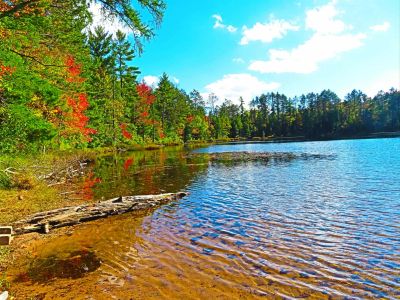
By Tom Wiensch AUGUST 27, 2026- When it comes to natural resources, there has been, among some, a sense of division between hunters/anglers and non-consumptive users of natural resources. In some circles, negative stereotypes of one or the other of these groups are used. This is unfortunate. One could speculate on what things drive these misunderstandings. Social media? Special interest groups? Political speeches? Other things? Regardless of the causes, as is usually the case with stereotypes, these stereotypes contain more falsehood than truth. Rather than concentrating on differences, it’s more important to consider the common interests of the two groups.
Many have noted that, if the consumptive and non-consumptive users of natural resources would really pull together, they could be an amazing instrument of change for the better. After all, both groups love to use our woods and waters, and both benefit from decent regulations that protect them. Historically, the two groups have been allies. Theodore Roosevelt, a hunter, helped protect 230 million acres of public land during his presidency, land which is used by hunters, anglers, hikers, paddlers, campers, birders and others. It’s also worth remembering that there is a third, larger group – All of us. Whether engaged in outdoor activities or not, all of us rely on clean air and water, and forest products.
During this current time of division, an old idea for another division has come to the fore. The idea is that the Wisconsin Department of Natural Resources should be divided into two departments, one handling fish and game, and one handling environmental quality. This idea has been run up the hill four times in the past few decades but has always stumbled before reaching the top. The legislature has wisely always chosen to allow the agency to remain intact. There is good reason to maintain a single, unified agency.
Everything in nature is interconnected. The mouse that eats the acorn is eaten by the hawk that is consumed by the vulture that dies and fertilizes the oak. Just as nature is interconnected, so are its values to hunters/anglers, other resource users, and all of us. Environmental advocates have worked to protect lands and waters that hunters and anglers use. Conversely, hunters and anglers have paid taxes under The Pittman-Robertson and Wallop-Breaux Acts that have preserved land and water for all to use.
Because of this interconnectedness, splitting the DNR into a Fish and Game Department and a Department of Environmental Quality wouldn’t make sense. The Wisconsin DNR was created nearly 60 years ago when the Conservation Department and the Department of Resource Development were merged. That reorganization made sense in light of the interconnectedness of the various missions of the two former agencies.
Division of the agency into two separate agencies, in different locations, with different staff, would make no sense, given this obvious overlap in concerns. Having two separate agencies would lead to:
All of this would come at a cost to taxpayers and would decrease the ability of the agencies to complete their missions. Competition for resources could cause budget shortfalls in one agency or the other. Imagine the potential for angry reactions if clean water initiatives were fully funded in a year when a fish hatchery had to close. Imagine if fish hatcheries were fully funded, but PFAS remediation was short changed. It’s easy to imagine many situations in which division of the agency could lead to underfunding of important missions and divisiveness between consumptive and non-consumptive users of natural resources.
It’s also easy to imagine situations in which work and communication would be more cumbersome, duplicative, and expensive if the agency were to be split. As things stand, in a unified agency, fish and game work and environmental quality work have significant areas of overlap. For instance, contaminants in fish pertain to both fisheries and environmental quality, and staff from various parts of the agency work on contaminant issue, which, in the age of PFAS, are more important than ever. Issues of fish kills, from improper manure spreading, and other causes, are also handled both by fisheries staff and environmental quality staff. Having these staff members working in the same agency, under the same direction is efficient and cost effective. Splitting the agency would damage efficiency and increase costs.
In 1995, the Michigan DNR was divided into two separate agencies – The Department of Natural Resources, and the Department of Environmental
Quality. In 1997, journalist Bob Gwizdz of the Ann Arbor News reported that the Michigan Senate Fiscal Agency found that the split had caused the cost of administration to rise 15%, the cost of executive division programs to rise by 66%, and environmental program funding to decrease by 4%.
Still, against reason, the idea seems to persist. The Milwaukee Courier reports that Gubernatorial Candidate Tom Tiffany has proposed splitting the agency, saying that it would be good for sportsmen. It’s unclear how this would benefit sportsmen unless the split resulted in the hook and bullet side of the agency getting extra funding at the expense of the environmental quality side.
In Medford tavern in July of this year, Tiffany said
“We are going to revamp the Department of Natural Resources. I am open to splitting the agency.
I am open to splitting the agency so you separate fish, wildlife, hunting, fishing, trapping from the environmental permitting part of it.”
In light of Representative Tiffany’s words and his environmental record, it’s hard not to be concerned that the “environmental permitting part of it” would be shortchanged at budget time.
Representative Tiffany’s choice of words – “environmental permitting part of it” is curious. The work of the agency not directly related to hunting/fishing/trapping involves much more than environmental permitting. Some of the other DNR responsibilities include:
These are just ten of the many things the DNR does that don’t directly relate either to hunting/fishing/trapping, or the issuance of environmental permits. That’s not to say that the DNR does not have a significant mission related to permit application review and issuance. It certainly does, and the permits it issues include those for such things as metallic mining, water discharges, waterway and wetland dredging and construction permits, and industrial air quality permits.
Representative Tiffany has also said: “We’re going to make sure that all of you with your sporting license fees, that it actually goes to having better habitat and more opportunity for sportsmen here in Wisconsin.” The Wisconsin Courier reports that the Legislative Audit Bureau has found that approximately 90% of the state funded Fish and Wildlife Account already goes to programs that benefit sportsmen either directly or along with other users. The Wisconsin Wildlife Federation (WWF)has stated: “Over the past 20 years, roughly 10% of spending has shifted from “primarily benefiting” hunters and anglers to the shared category of “benefiting hunters, anglers, and others.” This is not an abandonment of our sporting traditions, but a recognition of overlapping needs and a commitment to serving as many outdoor enthusiasts as possible with the resources available.”
There is a funding issue regarding the DNR’s Fish and Wildlife account, however, it is not caused by mismanagement of the fund by the DNR. The WWF reports that a Legislative Audit Bureau report for fiscal year 2023-24 shows that the DNR has been managing the Fish and Wildlife Account responsibly. WWF also reports that administrative spending from the fund stands at 10.3%, down from 11.1% in 2005, and well below the administrative funding cap of 16%.
WWF also notes that the fish and wildlife account would have fallen about $10 million short in 2023-24, but for a transfer of money from the Forestry Account. A substantial cause of the shortfall is stagnant license fees. Most of the fees charged for hunting/fishing/trapping licenses have remained unchanged for over twenty years.
The Fish and Wildlife Account is not alone in experiencing a funding shortfall. Wisconsin Public Radio, citing the non-profit Environmental Integrity Project (EIP), reports that, from 2010 to 2025, environmental agency funding in Wisconsin suffered a 29% cut. EIP reports that funding for pollution control programs in Wisconsin was cut from $121 million in 2010 to $85 million (adjusted for inflation) in 2024.
When asked whether they would support an increase in hunting/fishing/trapping fees to recognize inflation over the last 22 years, a strong majority of those participating in the Wisconsin Conservation Congress Spring Hearings in 2026 indicated that they would. The vote was 3263 to 1888. The only thing standing in the way of properly funding the hunting, fishing, and trapping programs of the DNR is not sportsmen, but the Wisconsin Legislature.
So, the Fish and Wildlife Account is not being pilfered to pay for environmental protection, or anything else. That makes it hard to escape the idea that that notion of dividing the DNR is a solution looking for a problem, unless the goal of division is something other than ensuring proper funding for hunting, fishing and trapping programs.
By Kathleen Cooper July 27, 2026 (Eagle nest photo credit Len Hyke)- If you think the heat and wildfire smoke we’ve been experiencing this summer are bad, it may just be getting worse in the next few years, because of unprecedented rollbacks on environmental protections by the US government. The current administration has gutted many of the agencies and rules that make our environment healthy and resilient, including our water. The new strategy for pushing through anti-conservation measures makes it difficult to combat. According to Dan Esty, a professor of environmental law and policy at Yale University and former commissioner of Connecticut’s Department of Energy and Environmental Protection, the Trump administration has engaged in a “flood the zone strategy to overwhelm the environmental community and make it nearly impossible for them to respond to every single executive order.” Recently, several devastating attacks on conservation have been launched.
Let’s begin with the most recent, the new interpretation of the Endangered Species Act. The Trump administration reversed decades of longstanding environmental law protecting endangered species, opening up sensitive habitats of those species to real estate development, oil drilling, mining, and other extractive industry. The interpretation redefines what constitutes the definition of “harm” to endangered species under the 1973 Endangered Species Act. The previous law had prohibited “habitat modification or degradation” because it could harm or kill endangered animals by impacting their ability to breed and find food or shelter. The original definition of harm was upheld by the US Supreme Court in a 1995 ruling. This new reversal does not consider habitat loss as “harm”, even though “Habitat loss is the number one cause of extinction,” states Gil Brogan, senior campaign director at Oceana. Earthjustice attorney Kristen Boyles said in a statement, “When you remove habitat protections you remove one of the law’s most important safeguards.”
It’s hard to imagine that there is widespread support for the Administration's newest interpretation of "harm". These habitats, so important to endangered species include forests, wetlands, and aquatic zones. In addition to protecting endangered species, these habitats also serve as natural filters to keep our air and water clean, as well as to sequester carbon. In fact, this law was key for the recovery of the bald eagle when it became threatened with extinction due in part to contamination from the insecticide DDT and habitat destruction. The changes to this law, in other words, could once again threaten our beloved national bird.
This would have heartbreaking consequences in Wisconsin, which has 25 species that are listed as federally threatened or endangered, according to the Wisconsin Department of Natural Resources. They include the northern long-eared bat, Karner blue butterfly, and piping plover. “Habitat loss is by far the number one threat to endangered and threatened species,” said Stan Temple, emeritus professor of forest and wildlife ecology at the UW Madison. Meleesa Johnson, executive director of Wisconsin’s Green Fire also clarifies the devastating impact of this change to environmental law - “If you remove a place for a species. . . how do they thrive?" U.S.Department of Interior Secretary Doug Burgum, who we “met” in a previous article where he stated that people who want to see our environment preserved are “financially illiterate” disagrees, saying that federal agencies previously abused the law to block development, burdening families and businesses. Of course, industry groups have supported Burgum and the Administration’s changes to the law, including the National Mining Association, American Petroleum Institute, and Transportation Builders Association.
Another longstanding environmental protection being gutted is the Roadless Rule. This rule was implemented in 2001 by the US Forest Service (USFS), and designated nearly 60 million acres of forests and grasslands within the National Forest System (NFS) as “inventoried roadless areas,” placing significant limits on the building of new roads and logging on these lands. These roadless areas include some of the country's least disturbed forestlands. In the decades prior to the roadless rule’s implementation, industrial-style logging, including clearcutting of large areas, led to wildlife habitat loss and also clean water degradation for downstream communities.
Past polling demonstrates that the public continues to be highly supportive of the roadless rule’s core approach to managing federal forests. When given the choice between conservation and development of national forests, a 2019 national survey pew-charitable-trusts---us-public-lands-survey-2019---memo-v4.pdf by The Pew Charitable Trusts revealed 75% of likely voters believe that conserving national forests and other roadless lands for current and future generations is paramount, while only 16% believe that more of these lands should be made available for timber harvesting and mining. While the administration claims that roads must be built through the forests for wildfire suppression, it’s difficult not to wonder what role the extraction industry played in the efforts to overturn the roadless rule. It's a fact that humans are the source of nearly 90% of wildfire ignitions. The majority of those ignitions tend to occur near roads, therefore, the recission of the roadless rule and the construction of new roads in the backcountry forests may actually increase the number of wildfires. Forest Service data cited that approximately 98% of wildfires in roadless areas have successfully been suppressed while still small.
Wisconsin's Michael Dombeck, former acting director of the Bureau of Land Management from 1994 to 1997, and the Chief of the United States Forest Service from 1997 to 2001, as well as a Professor of Global Conservation at UW Stevens Point states:
“Rescinding the Roadless Rule is a solution looking for a problem. For over 25 years the Roadless Rule has protected America’s backcountry and all the benefits that backcountry offers Americans. Lands in the National Forest System belong to all Americans and all Americans have a stake in their management. The Roadless Rule has served Americans well and a blanket rescission is not in the public interest . . . As citizens, these are our lands and it is our responsibility to manage all public land for the best interest of not only our generation, but to make them even better for future generations.”
If this wasn't enough, the Trump administration's EPA has also proposed a rule to strip Clean Water Act protections from up to 90% of US wetlands. The plan seeks to narrow the definition of “Waters of the United States” (WOTUS), leaving ephemeral streams and disconnected wetlands without federal safeguards. The plan restricts protections to only wetlands that have a continuous surface connection (“abut”) to jurisdictional, year-round waterways. Wetlands separated by barriers or those only holding surface water during certain seasons are excluded. Also, all Clean Water Act protections would be removed for “ephemeral streams”- seasonal watercourses that rely entirely on rain or snowmelt to flow. This deregulatory push affects ecosystems nationwide, reducing federal oversight on construction and real estate projects near previously protected wetlands and headwaters.
Environmental scientists and conservation groups have heavily criticized the move, citing the risk it poses to regional drinking water supplies, biodiversity, and flood control. Conversely, industry groups like homebuilders and mining operations applaud the proposal for easing permitting restrictions. Will McDow, Environmental Defense Fund Associate Vice President for Climate Resilient Coasts and Watersheds, explains, “Rollbacks of wetland protections weaken our natural defenses, making us less safe, increasing the cost of living, and undermining critical environmental benefits. The American people rely on wetlands to protect us from dangerous flooding, purify water, and provide critical habitat for many of the fish we eat. Stripping protections for wetlands means Americans will pay the price with more frequent downstream flooding, reduced water quality, and ultimately high insurance and food costs when wetlands are lost.”
Wetlands are critical ecosystems for communities and wildlife alike, home to 40% of the world’s species and 75% of US commercially harvested fish and shellfish species. Wetlands act as natural sponges to reduce downstream flood damage in the face of increasing climate-driven storms and disasters. One acre of wetlands also stores up to 1.5 million gallons of floodwater, acting as natural sponges to reduce downstream flood damage in the face of increasing climate-driven storms and disasters.
As if weakening the Endangered Species Act, the Roadless Rule, and the Clean Water Act weren't enough, the Trump administration has ended of the ban on mining near our beloved Boundary Waters in Minnesota. President Trump has signed a Congressional resolution that passed the Senate on a 50-49 vote, reversing a moratorium on mining on federal land that includes about 350 square miles of the Superior National Forest. The mining ban spanned an area encompassing the watershed of the Boundary Waters, meaning any water pollution from potential mines in the area that could flow into the wilderness area. This will cause irreparable harm to the fragile wilderness of interconnected rivers and lakes that draw canoeists from around the country. This resolution was actually introduced by northeast Minnesota Republican Congressman Pete Stauber. This resolution is intended to help Twin Metals Minnesota, which is a subsidiary of Antofagasta, a major copper and mining conglomerate based in Chile controlled by the billionaire Luksic family. While Twin Metals operates its headquarters in Ely and St. Paul, its corporate control and profits belong to its Chilean parent company.
However, Twin Metals must navigate a years-long, multi-agency environmental review and secure approval for multiple state mining and water quality permits before construction can begin. Hopefully by that time, the citizens of Minnesota can affect political change to not to allow a mine in the Superior National Forest. Such a mine is wildly unpopular as shown by a poll in which Minnesotans expressed opposition to such a mine by a roughly 2 to 1 margin (57% opposed to 23% in favor). Noted concerns are toxic pollution from hard-rock mining that would threaten the region’s clean water and vital tourism economy. Does that sound familiar to the folks who have opposed mining in Oneida County? Hmmmm……
Even though these environmental rule degradations have been facilitated by the current administration, in truth these are not Republican or Democratic issues - these are human issues. Drinking clean water, breathing clean air, preserving the survival of our fellow species - these are human issues, because we are a part of nature, and have a vested interest in preserving it. All the money and development in the world doesn’t really matter if there is no clean air or clean water left, if the soil is so depleted and polluted that it won’t yield abundant crops, if the trees and grasslands become dust bowls, if rivers, streams, lakes, and mountains are all filthy with runoff from mines, or littered with the remains of clear cutting. Call your federal, state, and local leaders and let them know where you stand on the recissions of these environmental laws. Make protecting the environment a priority when you vote in November. We all can help by making our voices heard. Our lives and the lives of our children and grandchildren depend on it.
Related articles:
How Wisconsin politicians voted on mining near Boundary Waters: Opinion | Johnson puts a nail in Boundary Waters coffin | Plain Talk by Dave Zwefel | captimes.com
Federal Fast-tracking mining at Wisconsin's Bend Deposit : Mining company's project in Wisconsin takes part in fast-tracked federal permitting process - WPR
WPR's Danielle Kaeding files Wisconsin specific endangered species article: Groups fear endangered species in Wisconsin are at risk under regulatory rollback | WXPR
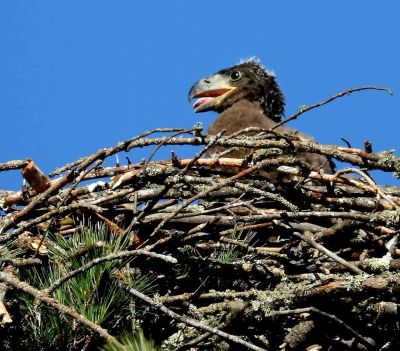
Letter to Editor submitted by Jeff Brown July 27, 2026- Tom Tiffany is running ads for his bid to become the next Governor of Wisconsin. His line is that he's the only candidate "Protecting Wisconsin Values". However, he is blatantly ignoring a loud and clear message from voters of Oneida County on Sulfide Mining. We DON'T value Sulfide Mining at the risk of sacrificing the quality of our water, land and other natural resources.....PERIOD!
Mr. Tiffany's personal work history before politics included extended years as the Dam Tender on Oneida County's Willow Flowage. An important job responsible for maintaining the desired water levels of this "Outstanding Resource Water" (as defined by the Wisconsin Department of Natural Resources) under the direction of the Wisconsin Valley Improvement Company.
Additionally, Tiffany operated the Wilderness Cruise tour boat business on the Willow Flowage, offering tourist customers an opportunity to view this Flowage while enjoying some music, a drink, or maybe a meal. His in-depth understanding of the wilderness beauty and pristine Northwoods allure can not be questioned.
Confoundingly, as State Senator, this "Protector" of Wisconsin Values single handedly drove the effort to overturn the 1998 Wisconsin mining protection language in what was referred to as the "Prove It First" Sulfide Mining Moratorium with his Wisconsin Act 134 in 2017. The "Prove It First" moratorium required mining applicants to demonstrate a safe operating design and then a 10 year safe closing history for Sulfide mines. None could be found, so the moratorium was eliminated by Tiffany. Is that the kind of protection you want? Just remove the safeguards if you can't implement them!
This history is especially important to consider as we prepare to vote for our next "Wisconsin Value Protector". The western portion of the Willow Flowage abuts the Lynne Mineral Deposit. Previous mining exploration determined this deposit to contain Zinc and trace levels of other desired minerals, among substantial amounts of sulfides. Sulfides become sulfuric acid when exposed to water and air. There's a significant dicey reality with the Lynne deposit. Not only is the deposit below the surface of the adjacent Willow River (the primary tributary into the west side of the Willow Flowage), part of the deposit is more than 400 feet below the surface! How would the Sulfide tailings be handled without exposure to water and air in this environment? Where is the "Prove It First" example of a similar safe Sulfide mine operation anywhere in the world? None exist!
Finally, let's recall the Protect The Willow effort of 2018 that culminated in the Oneida County Referendum that documented 62% of the residents support saying "NO" to any Lynne Sulfide Mining.
This would be a good time to invite the Oneida County Board to resolve to stop future attempts to experiment with this specific Sulfide deposit. The previous consideration by the County Board to stop Sulfide Mining in Oneida County failed because some board members said it was too broad in scope, as it included the entire County. As the 2018 Referendum was specific to the Lynne Deposit, any resolution to resolve against Sulfide Mining should also be Lynne Deposit specific. It will pass.
The unique characteristics of the Lynne Deposit, especially without "Prove It First" protection, make Tom Tiffany anything but a protector of this Wisconsin Value. Let's make it "OUR VALUE THAT WE ARE PROTECTING FROM TOM TIFFANY", or anyone else!
Jeff Brown Lynne Township Resident
Please note...this is my personal perspective. Not the view of Lynne Township.
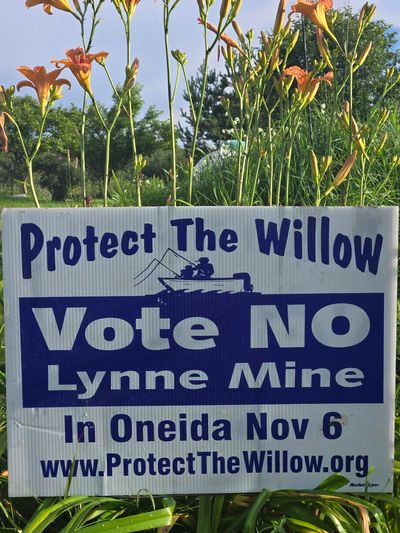
By Tom Wiensch July 22, 2026- (Photo Credit Len Hyke) I recently had a great lesson in the value of wetlands. I was fishing for northern pike in Canada with a friend. The pike were done spawning, but were in spawning streams, and bays in front of these streams waiting for the main lake to warm. One day, my friend and I caught dozens of pike (single barbless flies; all fish released) up to 42” long. About half of the pike were over 30”, meeting my criteria for large pike. All of these streams, and the bays in front of them had healthy wetlands with substantial growth of cattails and pencil reeds – prime spawning habitat for pike. The lake we were fishing is large and almost completely undeveloped. The wetlands were pristine.
This got me thinking about pike fishing closer to home. In Wisconsin, we have destroyed 50% of our wetlands. Trophy pike fishing opportunities in Wisconsin are extremely limited. Some of the reasons for this are natural. For example, pike have a hard time growing large in warm, eutrophic lakes. But some of the reasons aren’t natural. The downturn of pike numbers in The Bay of Green Bay offers an example. Lake Michigan is not a warm eutrophic lake, and it wasn’t long ago that the bay of Green Bay produced good numbers of trophy pike. In recent year, pike numbers in The Bay have plummeted.
Game and Fish Magazine reports that the reason for pike decline in the bay is loss of habitat, and that habitat consists of wetlands. More than 70% of the wetlands around the bay have been lost. Thankfully, restoration work is being done. The diminishing number of wetlands isn’t just bad news for this iconic native species, it’s also bad news for anglers and for the local economy. Game and Fish reports that Brown County Conservationist Mike Mushinski has reported that each pike is worth approximately $156 in terms of its economic impact to local businesses.
Contrast this with the cost of raising fish in hatcheries after the habitat has been destroyed. The Wisconsin fish stocking database indicates only private hatcheries have stocked pike in Wisconsin in recent years. Walleye, on the other hand are heavily stocked by the DNR and private parties, often because of destroyed spawning habitat. The database shows that, in one recent year, between the private sector and the DNR, over 200,000 walleyes were stocked in Oneida County alone.
A Northern Wisconsin private hatchery sells small walleyes for stocking at the price of $3.50-$4.50 per fish. Of course, in a fish eat fish world, most young walleyes don’t live long enough to become adult walleyes. The DNR estimates that the cost per fish that makes it to adulthood ranges from $101.77 to $640.01. It is clear that maintaining habitat is a much better way to maintain fishing than through stocking.
Robust fish populations are only one of many benefits of healthy, intact wetlands. Others include habitat for other wildlife, flood control, clean drinking water, shoreline protection, and various recreational opportunities.
Thankfully, the news about Wisconsin wetlands is not all bad. Much (but not all) of the loss came long ago when wetlands were viewed simply as useless places that could be filled in and developed. Thankfully, most people no longer have that mindset. Now, efforts are being made to protect and restore wetlands.
One measure of the success at turning around the destruction of wetlands is the health of waterfowl. Except for 2020, in every year since 1973, the Wisconsin DNR has conducted a spring waterfowl breeding survey. The 2026 survey resulted in some good news. The 2026 Wisconsin duck breeding population is estimated at 571,460. This represents only a 1% increase from last year- the better news is that this number is 28% above the long term mean. Some types of waterfowl have done better than others, but numbers of most types increased in the last year.:
Of course, wetland health is not the only factor in changes in waterfowl numbers. Still, wetland health has a direct effect on and is one of the most important factors relating to waterfowl numbers. Healthy wetlands not only benefit these waterfowl, which have intrinsic value, but also benefit animals that prey on waterfowl as well as birders, hunters, and those who simply enjoy seeing wildlife.
Wisconsin has many types of wetlands, all of which have intrinsic value as part of the natural landscape, and all of which benefit various other species, including man. For more information on the types of wetlands and their benefits, check out the web page of the Wisconsin Wetlands Association at Benefits | Wisconsin Wetlands Association.
Related links:
Wisconsin DNR Spring Waterfowl Survey report: Spring Waterfowl Survey Shows Positive Results | Wisconsin DNR
Wisconsin DNR 2026 waterfowl survey results: 2026wiwaterfowl_bpop_report.pdf
Wisconsin Wetlands Association's Oneida County fact sheet: Oneida.pdf

**Updated July 9, 2026**
Oneida County P&D Committee unanimously approves forwarding 1-year Data Center Moratorium to County Board for August vote.
With dozens of Oneida County residents in attendance, the Planning and Development Committee (P&D) unanimously voted to forward a 1-year interim moratorium on data centers to the County Board for adoption. At the P&D's July 8th Public Hearing, there were many public comments in favor of the moratorium. The comments varied from passionate to matter of fact statements. The one common theme was data centers had no place in our water rich county.
The P&D Committee had planned to include language to add the unzoned towns of Monico, Enterprise, and Sugar Camp to be covered in the moratorium, but the Committee stated that additional language would have to be added at a later date. For those of you unfamiliar, unzoned towns have no zoning which means any type of land development may occur anywhere in the town as long as it complies with state statutes. One has to wonder if these towns have chosen to be included in this particular moratorium considering it was never an issue for them with past moratoriums on mining and concentrated animal feeding operations (CAFO's).
We at OCCWA applaud the P&D Committee on their foresight to place a moratorium on data centers at this time. The County now has one year to construct and adopt acceptable language on whether data centers will be allowed and what if any type of operational restrictions the county will impose. With many counties and towns already in the midst of dealing with Wisconsin's data center invasion, it's expected there will be many fine examples of ordinance language for the county to consider.
It's important to remember that the county's mining moratorium resulted in an ordinance allowing mining in over 70% of the county. In the case of the CAFO moratorium the county chose to do nothing. The point being, having a moratorium does not guarantee an acceptable outcome. This highly contentious issue will continue to require monitoring.
The Data Center Interim Moratorium is now moving on to the August County Board meeting for final adoption where unanimous approval is expected. The full language of the moratorium may be viewed here: 7.8.26-NPH-Dilley-Waterhouse-Jones-OA-02-2026.pdf
WJFW Coverage
WJFW's Derek Tritz did a fine job covering the public hearing at Oneida County pushes Data Center Moratorium to County Board | | wjfw.com Derek initially laid some of the informational groundwork for the public hearing in his June 1st coverage. Possible Data Center Moratorium for Oneida County in Progress | | wjfw.com
WXPR's Katie Thoresen Coverage
Oneida County data center moratorium advances to county board | WXPR
Original OCCWA article, By Kathleen Cooper June 26, 2026- There are two words that can cause voices to raise, anger to flare, and much resentment about the power of huge corporations, and those two words are Data Centers. The data center boom in this country is affecting the quiet lives of many in the small towns of Wisconsin, and no one is happy about it. The people in the affected towns want more regulation of data center construction and the infrastructure needed to support them, but the data centers and corporations like Meta, Google, and Oracle want to force these centers on these small-town residents whether they like it or not.
South of us in Port Washington, voters decided to have a referendum requiring voter approval for future tax incremental financing (TIF) districts over $10 million. TIF downfalls include diverting property taxes away from public services (like schools and emergency services), creating municipal budget volatility, and frequently subsidizing private developments that would have happened anyway. In other words, the voters didn’t want to give massive tax breaks to corporations who were also taking their water and raising their power rates, as well as polluting their environment.
Ahead of this referendum, business and real estate organizations sued the city, arguing that the proposed referendum conflicted with existing state laws governing TIF districts. Despite the legal challenges, the referendum proceeded and voters approved the measure. Even so, lawsuits continue in Port Washington, with Great Lakes Neighbors United suing the city over its approval of a $458 million TIF district to support the data center. At the same time, tech giant Oracle is suing the Public Service Commission of Wisconsin to loosen financial and credit-rating requirements imposed on massive data centers using local energy grids. Oracle sues PSC, seeking to relax data center rules - WisPolitics
Clean Wisconsin commented on the Public Service Commission lawsuit saying, “The Public Service Commission did exactly what it’s supposed to do. It acted to protect We Energies’ other customers - families, small businesses, schools, manufacturers - and shield them from the risks associated with these enormous energy users.”
It seems like these centers are not only being forced on the unwilling residents of Wisconsin, but we are also getting sued to be forced to pay their electric bills? In return we get construction jobs only while the center is being built, then minimal jobs once the centers are up and running. Along with higher electric bills for us, these AI data centers are resulting in local wells going dry and new and expensive fossil fuel generation, which will cause lasting environmental and health harms.
What does any of this mess have to do with Oneida County?
Plenty. The Planning and Development Committee of the Oneida County Board is drafting an Interim Moratorium on Data Centers. This will allow the Oneida County Board to limit data center start ups for one year. OCCWA supports this moratorium. A Public Hearing 7.8.26-NPH-Dilley-Waterhouse-Jones-OA-02-2026.pdf on the data center moratorium will be held on July 8th at 1:00 pm in the County Board Room at the Oneida County Courthouse. Please do your research and consider attending the Public Hearing if you can. You can also email your County Board Supervisor or all of them, including Scott Holewinski, the County Board chairman.
Passing this moratorium is a good first step. Port Washington did not have a chance to enact regulations before having data centers forced on them. We have the time to actually “protect the public health, safety, and welfare, while the County conducts necessary review and considers appropriate regulatory standards” as stated in the Interim Moratorium on Data Centers. Our County Board has an opportunity to protect the public, by passing regulations and zoning that can limit the draining of our water resources, the driving up of our electric bills, and the construction noise and pollution during this coming year.
That being said, having a year-long moratorium isn’t a permanent answer. In 2022, Oneida County failed to pass a Manure Storage Ordinance after a 1-year moratorium. MANURE STORAGE - Oneida County Land and Water Conservation. After that moratorium expired, the County passed on approving an ordinance which would have addressed Concentrated Animal Feeding Operations (CAFO's). Failing to address the Data Center issue by the time the moratorium expires would be unacceptable. Hopefully, the County won't let these mega corporations continue to bully and jeopardize our way of life in rural Wisconsin.
Email Public Hearing comments to:
If you cannot attend the July 8th Public Hearing, you may email comments to the P&D Committee at: zoning@oneidacountywi.gov
Oneida County residents must include your name and address in your comments.
Non-resident property owners may comment but must provide home address and property owned addresses.
Share your concern with your County Supervisor:
You may want to express your position on Data Centers with your County Board Supervisor. Supervisor contacts may be found at: County Board – Oneida County, WI

By Dan Butkus July 2, 2026- We in Wisconsin, and especially in the lake-rich Northwoods, devote a lot of time discussing threats to our water quality: PFAS, invasive species, fertilizer and manure runoff, etc. Certainly, being educated and involved politically in these issues helps. Locally, we often turn to our own lake association to help combat some of them on our own lakes. The current battle with the invasive species Eurasian Water Milfoil (EWM) on many northern lakes has our lake groups preoccupied. There are grant dollars available from the DNR for qualifying lake associations, but being awarded a grant is not guaranteed. So, we depend on donations and volunteers. We often see “donor fatigue”, the same few people bearing the lion’s share of the financial and volunteer burden. And what happens if you have a good program in place, but suddenly lose the next grant bid? Some of these invasive species control programs are expensive. The solution might be to form a lake district.
Most people have no idea what a lake district is. For some, the mere mention of “lake district” conjures up feelings of the boogieman under the bed ready to impose taxes for silly things such as making sure we all have the same color flowerpots. And of course, the internet is full of stories about HOA's run amok. The bottom line is that there are plenty of mysteries and misconceptions to go around to cause stomachs to tighten at the mere mention of them. To help the reader wade through the myths, I’d like to cover some basics here.
First and foremost, people who know me know the first thing I say about a lake district is that it can be a useful tool, but it may not be right for every lake. That said, let’s get started on dispelling some myths. Lake districts are a local form of government created by the owners around a lake and other property owners who may have a benefited interest in, or use of, the lake. It’s not easy to form a lake district. Nor should it be. Creating a local form of government is serious business. As a government, districts have the ability to levy property tax. However, they are limited to how much they may tax. Wisconsin State Statutes in Chapter 33 explains just what a lake district may and may not do, how to form one, and other aspects of their function as well as spelling out the limits to its taxing authority. Nowhere are districts given the ability to regulate what color flowerpots you may have. Instead, their function is limited to programs to maintain or improve water quality and lake health.
The next big bug-a-boo is taxation and governance. Lake districts are unique as a form of democracy. There's nothing else like them both in Wisconsin and within the United States.
Electors (those of legal age residing within the district) and property owners (including non-resident property owners) form the backbone of a district. A lake district is as close as you can get to a direct democracy. The owners and electors decide everything at the annual meeting: what programs the district will carry out, how much it will spend for these programs, and therefore, how much the owners and electors will tax themselves. That’s right. It’s not a representative form of government where a group of elected officials decide what you’ll pay. You and your neighbors on the lake get together and decide that each year.
The owners and electors are in control. The commissioners are tasked with carrying out the directives of the owners and electors. As a friend of mine who was a lake district commissioner once said, “As a commissioner, you basically cannot go to the bathroom without getting permission from the owners and electors.” A slight exaggeration, but not much of an exaggeration. The commissioners also ensure that as a government, the lake district complies with state statutes regarding open meetings and open records.
Three of the commissioners are elected by the owners and electors on a rotating basis, one commissioner each year, each with a term of 3 years. Basically, you elect your neighbors to the role of commissioner. There are two additional commissioners: one is appointed by the county, and one appointed by the town. Usually these are Town and County Supervisors. These appointed commissioners raise many eyebrows around the lake, “You mean outsiders, or worse, the Town and County, tell us what to do?” Not really. They are there as conduits of information between the Lake District and the Town and County. They also have experience running local governments so they can help guide the elected commissioners navigate the complexities of local governance. Typically, the elected commissioners take up the position of chair, treasurer, and secretary, though the appointed commissioners may assume those roles. The commissioners themselves decide which of them will assume which role in a special meeting right after the annual owners/electors meeting. The commissioners meet roughly four times a year to carry out the directives from the owners/electors. All meetings are open to the public, including the annual meeting of owners and electors. All meetings and the budget must be posted. No secrets. It’s all out in the open.
But how does a lake district differ from a lake association, if it can perform the same function to improve water quality? Originally, when Chapter 33 was passed by the Legislature in the 1970’s, lake districts concerned themselves with taking over abandoned or dilapidated dams in order to maintain the integrity of an impoundment lake. No one person, nor association, had the resources to take over the maintenance of a dam. A district with the power to levy a tax could. Over the years, new threats to lakes arose. Most recently, invasive species control, like EWM, became a more immediate and expensive need. Lake districts adapted. Assured of a tax base, long term invasive species control programs are more easily implemented. Some area lakes now monitor PFAS levels, salt content from road runoff, and other water quality projects. Some of these programs can quickly outstrip a lake association’s resources. Donations may fluctuate from year to year. A tax levy can even this out. Additionally, a property tax levy is a more equitable way to distribute the cost to all owners within the district, whereas voluntary donation often taps the same few donors causing donor fatigue and donation dropoff. The State of Wisconsin has seen an increase in the number of lakes attempting to become a lake district in recent years.
The words “attempting to become a lake district” are key here. It’s not simple. The process is detailed and difficult. But basically, at least 51% of the owners within the proposed district must sign a petition to form a district. Then there’s a public hearing by the County, and a vote of the County Board. Also, a Town may form a district using similar procedures. Getting those signatures isn’t easy. First, you have to overcome the misconceptions that abound surrounding lake districts. Also, who out there will rush to tax themselves more? Most cases, though, a simple calculation can often allay those fears. In the case of one lake I know, the cost of the tax levy amounted to the cost of an extra dinner out a year for two, with drinks, at a local supper club. You have to ask yourself, “Can I afford one more dinner out if it helps maintain or improve the quality of our lake?” Most times, the answer is “sure!”
To learn more about lake districts and how to form them, Extension Lakes (UW Stevens Point) has an excellent booklet on forming an operating lake districts and lake associations called, “People of the Lakes”. Visit the following link at: Lake Organizations - Extension Lakes
Note: The author, Dan Butkus helped form the Squash Lake P&R District in 2016/2017 and was its Commissioner/Treasurer for 8 years. He assisted a neighboring lake navigate the lake district journey. He has been a Director and President of Wisconsin Lakes, a non-profit serving lake associations and districts in Wisconsin, and in that role helped answer a number of questions on lake districts and lake associations. He assisted in drafting proposed legislation aimed at clarifying and updating the statutes in Wisconsin Chapter 33. He is also a consultant that helps lakes with their quest to form a lake district.
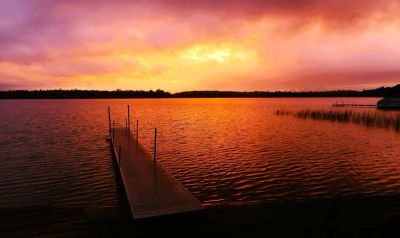
By Eric Rempala June 30, 2026- The byline of my April 27th OCCWA article stated, "DNR embarking on a monumental process that will test affected communities' patience". In that same article, we shared a quote from WNDR Secretary Karen Hyun.
“We are focusing right now on understanding the degree and extent of the contamination, stopping the exposure and getting people clean drinking water,” Hyun said. With 800,000 private wells in Wisconsin, she urged people to get their water tested to determine their risk of exposure. Hyun added they hope to launch a second round of PFAS sampling for high capacity wells, wastewater and landfill leachate early next year. The DNR also plans to issue a general permit by July for entities spreading sewage sludge on roughly 5 percent of the state’s harvested cropland. Entities would be required to test their sludge for PFAS, and levels must fall below a 20 parts per billion threshold for them to spread the nutrient-rich material on fields. Before any work can start, the DNR plans to begin hiring 10 positions authorized under the bills as soon as they’re signed. Hyun expects the hiring process to last four to six months."
With that focus as the backdrop, we are beginning to see some of the DNR's initial efforts to begin the monumental process of addressing PFAS contamination across our exceptional but now compromised water resources.
DNR solicits input from public, environmental organizations, and outside technical experts
During the week of June 15th, the Wisconsin DNR hosted 3 different listening sessions with leaders of partner organizations, technical audiences, and community and public audiences to share ideas about how these programs could be implemented to best meet the needs of individuals and communities throughout Wisconsin.
The potential topics of feedback could include:
Having talked about PFAS contamination in our county with many different DNR employees over the past three years, I have never been disappointed with their transparency and willingness to communicate with our organization. Which is why it doesn't surprise me that most of the bullet points provided for the listening sessions focused on asking what the public needs and how to best share information with those affected by PFAs contamination. Hopefully the information the DNR gathered in the listening sessions will improve the process.
New 2026 proposed PFAS Biosolid Interim Strategy
The DNR has proposed changes to their current Biosolid PFAS Interim Strategy. The DNR initially adopted their current interim strategy Interim Strategy for Land Application of Biosolids Containing PFAS based on the State of Michigan's 2022 interim strategy. The newly proposed land spreading limit changes from that strategy are encouraging. We see lower PFAS limits on the allowable biosolid spreading amounts and implementing PFOA and PFOS monitoring requirements into reissued general permits. It's important to note that biosolid PFAS amounts are measured in Parts Per Billion (PPB) which is 1,000 times greater than Parts Per Trillion (PPT) the amounts drinking and groundwater are measured.
In Tier 4 of the proposed interim strategy, the maximum amount of PFAS levels in biosolids allowed to be land applied has been reduced from 150 ug/kg (Parts Per Billion, PPB) to 100 PPB. A 50% reduction from just two years ago.
In Tier 2, PFOA greater than 20 ug/kg (ppb) and <50 ug/kg (ppb) a reduced application rate of 1.5 dry tons per acre was added. That 1.5 dry tons limit previously only applied to Tier 3, PFOA + PFOS at or above 50 ug/kg (ppb) .
DNR proposed 2026 update to the PFAS Biosolid Interim Strategy Tier Scale
Tier 1: PFOA + PFOS <20 ug/kg (ppb)
• Track cumulative PFAS loading on each field.
o PFOA
o PFOS
o PFOA + PFOS
• Notify the property owner/farmer of the results.
• Land apply the biosolids or industrial sludge without additional requirements.
Tier 2: PFOA + PFOS at or above 20 ug/kg (ppb) and <50 ug/kg (ppb)
• Track cumulative PFAS loading on each field.
o PFOA
o PFOS
o PFOA + PFOS
• Notify the property owner/farmer of the results.
• Monitor WWTF effluent for PFAS within 30 days if not already required under the WPDES permit. Report the results to the department.
• Create and implement a (or continue an existing) PFAS source identification and reduction plan.
• If PFOA is greater than 20 ug/kg (ppb), notify the department and reduce application rate to 1.5 dry tons per acre or propose an alternative risk mitigation strategy for approval from the department to land apply.
• The department will modify the facility’s WPDES permit to incorporate numeric limits or conditions to address PFAS in biosolids.
Tier 3: PFOA + PFOS at or above 50 ug/kg (ppb) and <100 ug/kg (ppb)
• Track cumulative PFAS loading on each field.
o PFOA
o PFOS
o PFOA + PFOS
• Notify the property owner/farmer of the results
• Monitor WWTF effluent for PFAS within 30 days if not already required under the WPDES permit. Report the results to the department.
• Create and implement a (or continue an existing) PFAS source identification and reduction plan.
• Land apply at a reduced application rate of 1.5 dry tons per acre or propose an alternative risk mitigation strategy for approval from the department to land apply.
• If PFOA is greater than 20 ug/kg (ppb) notify the department.
• The department will modify the facility’s WPDES permit to incorporate numeric limits or conditions to address PFAS in biosolids.
Tier 4: PFOA + PFOS at or above 100 ug/kg (ppb)
• Land application is not allowed. Arrange for alternative management and/or disposal.
• Notify and provide results to the department
• Monitor WWTF effluent for PFAS within 30 days if not already required under the WPDES permit. Report the results to the department.
• Create and implement a (or continue an existing) PFAS source identification and reduction plan.
• Site specific requirements may be necessary.
• Requests for new land application site requests by the WPDES permitted facility are not approved.
• Requests to transfer sites to the WPDES permitted facility are not approved.
• The department will modify the facility’s WPDES permit to incorporate numeric limits or conditions to address PFAS in biosolids.
Key Thresholds & Rules
Tracking cumulative PFAS loading language needs improvement
At OCCWA we believe that the DNR's proposed tracking of cumulative PFAS loading needs to be better defined. In attending the town of Stella DNR meetings these past 3 years, one public comment stood out to us, "No more spreading on known contaminated fields". This simple statement sums up a perspective that if your fields are already known to be contaminated, then no biosolid spreading regardless of PFAS level should be allowed.
OCCWA over the years has reiterated this idea to the DNR. We also have shared this concept with other organizations in a Wisconsin PFAS coalition we participate in that addresses PFAS contamination in the state. Those organizations helped us better define what that "No more spreading" concept might look like, including initial soil testing requirements. Our coalition partner Clean Wisconsin stated it best:
"Tracking of cumulative loadings should begin with soil testing to determine baseline concentrations of PFAS, necessary to understand PFAS migration patterns and inform subsequent land-application rates. The proposed Update advises dischargers to track “cumulative loadings of PFOA and PFOS on each field receiving municipal biosolids and/or industrial sludge” but does not provide guidance on assessing PFAS concentrations in soil beforehand. Without understanding initial levels of PFAS contamination in the soil prior to land spreading, neither cumulative loading nor migration patterns can be adequately assessed, creating a risk of exacerbating already high concentrations. For example, soil assessments in the Town of Stella have found PFAS concentrations more than three times background levels,1 yet, under the proposed Update, additional PFAS could still be applied. Initial soil testing is necessary to inform appropriate reductions in land-application rates and protect public health."
Our coalition partners have been invaluable in advancing protections for affected PFAS communities in our state. Most recently, they provided public comment on the DNR's proposed Biosolid Interim Strategy. We are hopeful the DNR will incorporate those public comment suggestions on banning biosolid spreading on known contaminated fields, increased soil testing, and more, into their final edition of the state's newest PFAS Biosolid Interim Strategy.
Related: PFAS coalition member Wisconsin's Green Fire comments on PFAS Biosolid Interim Strategy WGF Comments on WDNR's Interim Strategy on PFAS in Biosolids • Wisconsin’s Green Fire At
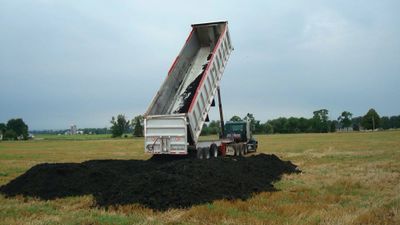
By Kathleen Cooper May 14, 2026- Unless you have been living in a cave in the Himalayas for the past decade, you have probably heard of the major disruptions that massive data centers have brought to small towns all over the country, including in Wisconsin. Our state is experiencing a major boom in data center construction, with 4 operating facilities and 11 more planned projects. Major projects, driven by AI demand and hyperscalers like Microsoft and Meta, are concentrated in the southeastern region, specifically in Mount Pleasant, Port Washington, and Beaver Dam, while Kenosha, Racine, Ozaukee, Rock, and Wood Counties are being considered for new projects. The influx of these power-hungry AI centers is forcing, at minimum, a $5.5 billion upgrade plan from Wisconsin's WE Energies. Responding to concerns of transparency and financial risk to current customers, Wisconsin utility regulators ordered Alliant Energy to set a standard rate for future data center customers. A related quote from WPR article : Wisconsin regulators approve rates for Meta's Beaver Dam data center, with sharp criticism - WPR
"PSC Chair Summer Strand said the utility’s proposal fell short on safeguarding customers from harm and creating an open process, calling transparency “non-negotiable.”“As we saw here, there is still this black-box approach that includes nondisclosure agreements, heavily redacted filings, corporate pseudonyms and negotiations shrouded in secrecy,” Strand said. “It seems obvious, but I guess I have to say it: This lack of transparency is hurting not helping.”
While bringing economic development, these projects are raising questions about water and energy usage, leading to community pushback in some areas. As of early 2026, a growing bipartisan coalition of politicians and public figures have spoken out against the rapid, largely unregulated expansion of data centers. Many of these politicians do not agree on most issues, but the have come together to advocate for a nationwide moratorium on new data center construction. Politicians like Senator Bernie Sanders (I-VT), Representative Alexandria Ocasio-Cortez (D-NY) along with, surprisingly, Gov. Ron DeSantis (R-FL), Senator Josh Hawley (R-MO), Senator Bernie Moreno (R-OH), are speaking out against this unregulated expansion. They are calling for more transparency while stating concerns about automatic subsidies and unlimited access to local resources.
There is also a coalition of over 200 environmental groups, including Greenpeace and Friends of the Earth, that have demanded a federal pause on new data centers. The backlash is driven by several recurring issues, including high electricity bills as residents are seeing rising energy costs to support massive server farms. These data centers also cause environmental damage due to increased pollution from fossil fuels used to power data centers and the high water usage required for their cooling. Additionally, there is concern that the massive demand from data centers will cause power shortages. Even entertainers like Charlie Berens (beloved Wisconsin comedian/journalist) have added their names to the growing number of citizens opposed to these massive undertakings.
At the federal level, the Trump administration and its AI czar David Sacks are in the forefront of promoting more and more data center construction and looser regulations on artificial intelligence. In an excerpt from Fortune, Sacks was quoted “Polls may show that AI is not popular, but economic growth is,” said venture capitalist David Sacks. “At this point, stopping progress in AI would be equivalent to halting the U.S. economy.”
The data center developers’ playbook is to keep the public in the dark as long as possible, and then when plans are finalized and it’s too late, then announce the project that potentially could raise their taxes and electric bills, pollute their air, disrupt their rural way of life, and use massive amounts of water. A case in point is Menomonie. News of a $1.6 billion data center project proposed in Menomonie broke in July 2025, after city leadership had already begun holding closed-door meetings with Balloonist, LLC, who never disclosed which tech company would operate it. Menomonie’s city administrator and other officials had signed nondisclosure agreements on the project in February 2024, 18 months before the public learned anything about it. Leaders in other communities have signed similar agreements.
It was only weeks before the city council voted to annex and rezone the land to move the project forward that Menomonie residents learned a secretive development firm planned to build a data center on 320 acres of farmland on the outskirts of town. Organizers opposing the project were fighting an uphill battle. While data centers promise jobs and economic stimulation, residents had serious concerns about the project, such as major tax breaks, few permanent jobs, draining municipal water resources, driving up electric bills, and resulting in construction noise, light, and air pollution.
Already, Wisconsin residents have seen some of these impacts at data center sites in Port Washington and Beaver Dam. Residents in Port Washington have complained about the disruption caused by around the clock construction at the new data center. Families near the construction in Beaver Dam have reported that their wells have run dry. “Data center construction is the most cruel thing a city can do to its residents,” says Sarah Zarling, who has been fighting the Beaver Dam project and supporting organizers in Menomonie. “The impacts are just absolutely immense. They’re life-changing.”
Menomonie residents took to social media, held protest demonstrations, and attended city council meetings to voice their opposition and share information. By September 2025 there were over 1,000 Menomonie residents and allies in a Stop the Menomonie Data Center Facebook group - more than half the town’s population. The pressure on Mayor Randy Knaak was so great that, even though the city council had voted to annex and rezone the land for the data center in early September 2025, the mayor announced at a September 22 city council meeting that he had notified Balloonist that the city would not be moving forward with the development agreement. Then in January 2026, the Menomonie City Council voted unanimously to place additional regulations on data center projects. Menominee organizers have also made connections with others in Wisconsin facing similar fights, and now those efforts have grown into a statewide coalition.
Aside from Menomonie, the towns of DeForest, Cassville, and Port Washington have organized against developments backed by tech giants like Microsoft, Meta, and OpenAI. The DeForest Village Board unanimously rejected a proposed OTS data center on farmland. Residents in the rural Driftless Area town of Cassville rejected a massive data center project, citing concerns about water contamination and property devaluation. In Port Washington residents have protested a massive $15 billion Vantage Data Centers campus, citing concerns about high electricity bills and the use of secretive non-disclosure agreements (NDAs) by local officials. In Manitowoc County (Two Creeks, Mishicot, Two Rivers) residents pushed for a one-year moratorium on new projects to prevent a Cloverleaf Infrastructure development. In Beaver Dam and Kenosha, resistance rallies have occurred over proposed Microsoft and Meta projects, voicing concerns about secretive negotiations and environmental impacts. In Wrightstown residents have expressed strong opposition to a potential data center project proposed by Cloverleaf Infrastructure.
At the state level, Wisconsin does not have a comprehensive state law specifically regulating data centers to protect citizens, but lawmakers have provided several proposals. The Data Center Accountability Act (SB 729 & AB722) is a Democratic proposal that aims to ensure data centers pay their fair share of energy costs, requires them to use 70% renewable energy for tax exemptions, and mandates reporting on water/energy use. The NDA Prohibition Bill (AB-1036/SB-969) aims to ban local governments from signing confidentiality agreements that conceal data center projects. The GOP Regulatory Bill (AB-840) was passed in the Assembly and requires data centers to pay for their own infrastructure costs and to implement water conservation measures, with some Democratic critics' arguing it did not go far enough to hold companies accountable.
On the local level, Manitowoc County has passed a 118-month moratorium to halt the approval of new large-scale data centers while they develop local guidelines. Other ways to combat data centers locally is to change the zoning to restrict where data centers can be built and to increase setback/height requirements. Any proposed regulation needs to address ratepayer protection, which prevents the cost of new power infrastructure for data centers from being passed on to residents. The environmental impact also needs to be addressed because of high water usage and the potential of using renewable energy. Lastly, all proposals need to be transparent by restricting the use of non-disclosure agreements with local officials.
Here’s a hypothetical considering what has already happened to other Wisconsin counties and municipalities. Let's say Meta wants to build a data center in Oneida County. First of all, they make up an LLC, so that the corporation behind the project is unknown. Then this mysterious LLC comes to the Oneida County Board or the Planning and Zoning Committee, persuades them to sign nondisclosure agreements, and asks for favorable zoning, tax breaks, access to the power grid, and access to water. Then 18 months later, when the announcement is made that they will break ground on the secretive project, the public is finally notified. That means that these corporations can walk into your town, the town where you have raised your family and are now perhaps looking forward to a quiet, relaxed retirement, and just take it over. This is happening all over the country, not just in Wisconsin, and many, if not most, locations are fighting losing battles. Let’s prepare before these centers come to the Northwoods.
By Tom Wiensch March 19, 2026- In 2025 and 2026, the EPA proposed two significant rule changes regarding the protection of waterbodies and wetlands. The New York Times has described these changes as “a one-two punch against the Clean Water Act.” In a February 29 OCCWA article I covered one of those changes that stemmed from an important Supreme Court Case (Sackett v EPA) which significantly changed the types and numbers of waterbodies and wetlands protected by the Clean Water Act of 1972 (CWA).)
Following the Sackett case, the Trump Administration proposed federal regulations changes that would further limit the waterbodies and wetlands covered by the CWA by narrowing the definitions of “waters of the United States” and “adjacent wetlands.” In the January 29th article I explained the likelihood that most wetlands and some waterbodies in Wisconsin would lose federal protection. I also suggested that the changes would leave State and local government with the burden of protecting many wetlands and various waterbodies.
This companion article addresses the second proposed rule change, which would limit the ability of states and tribes to protect waterbodies and wetlands in situations where federal permits are required. This effort at limiting state and tribal power comes in the form of proposed amendments to regulations under Section 401 of the CWA.
Section 401 authorizes states and some tribes to approve, deny, or set conditions on federal permits for projects affecting certain waters in their jurisdictions. These permits relate to various activities that can damage waterbodies and wetlands, such as mines, pipelines, data centers, dams, dredging, filling, and more. Federal regulations relating to this section were first enacted in 1971 and then amended in 1972 when the CWA was adopted.
Some examples of states and tribes exercising rights under Section 401 include:
The first major change to regulations under section 401 since the 1970’s came under the first Trump Administration in 2020, which limited the powers of the states and tribes. That change resulted in litigation, and in 2021, the Biden Administration enacted regulations which reversed the Trump regulations. Now, the Trump administration has proposed new regulations which would reverse the Biden regulations and undercut the ability of states and tribes to protect waters on their lands.
Chief among the provisions of the new regulations are two things. First, they would limit the types of affected waterbodies and wetlands over which states and tribes could control permitting. The new regulations would only allow state and tribal control over permits for the narrower lists for waterbody and wetland types delineated in the Sackett case. Additionally, the latest Trump administration regulatory definition changes, if adopted, would further narrow the list of waters over which states and tribes would have federal permit control. This would mean that state and tribal permitting control would not apply to most wetlands and some waterbodies in Wisconsin.
Second, concerning the wetlands and waterbodies over which the states and tribes would still have control, the proposed regulations would remove their ability to consider “activities of the whole” when determining if permits should be approved. Instead, states and tribes would be limited to considering point source discharges only. In other words, when determining whether to authorize permits, states and tribes would only be able to consider the quality of the water being discharged, and not other water quality related issues such as oil spill risks, maintenance of stream buffers, protection of riparian habitat, soil erosion control, landslide prevention, cultural impacts, and impacts on wildlife.
If the authority of states and tribes becomes limited in this way, their ability to protect the waters of their own lands would be greatly reduced. This would represent a significant step away from the sort of local control that so many Wisconsin elected officials have said is important, and that so many communities rely on. Also, if these local controls are diminished at the same time that EPA control is being reduced, it may be that there will be significant wetlands and waterways that no government agency can adequately protect from potentially damaging projects that require federal permits.
This raises questions about what sorts of federally permitted projects may fall outside of the control of states and tribes if the regulations are changed. The proposed change may affect the ability of states and tribes to have a say in the permitting of such projects as:
The New York Times has reported that this rule change would “limit the ability of states to block the construction of oil and gas pipelines, coal export terminals and other energy projects that could pollute local waterways.” The Times also reports that Assistant EPA Administrator Jess Kramer has said that the changes are important to supplying electricity to data centers, and that the EPA’s leading priority is to “maximize efficiency” and eliminate permitting delays.
It’s impossible to predict all of the types of damaging projects that this change could unleash. At any rate, the proposed regulation change is clearly aimed at curtailing the ability of states and tribes to have a meaningful say over certain waterbodies and wetlands that exist on their lands. The EPA plans to attempt to change this rule in the spring of this year. Comments were solicited (the time for commenting has passed), but relatively few were received, likely due to the relatively complex nature of the rule, the limited publicity it received, and the short time allowed for commenting.
This attempt to reduce local control comes at the same time as an effort is being made to undercut the ability of the EPA to protect wetlands and waters. These coordinated efforts pose troubling questions about the future of the rich, clean wetlands and waters of Oneida County and beyond. Only about half of Wisconsin’s original 9 million acres of wetlands remain. Wisconsin Green Fire has reported that about 75% of those wetlands will not have federal protection if the rule change relating to federal control is passed. The result of the proposed change to the section 401 rules would be to remove state and tribal control over federal permitting of projects relating to that same 75% of wetlands (and certain streams and ponds.)
Oneida County, which is noted for being rich in lakes, is also rich in wetlands, small streams, and ponds. About 30% of Oneida County, or 236,000 acres, are wetlands. We also have over 1100 lakes and over 800 miles of streams. 10% of Oneida County is covered in water. The two rule changes that have been proposed would remove the ability of States and Tribes to deny or condition federally permitted projects on wetlands except those with a continuous surface connection to relatively permanent, standing or continuously flowing bodies of water (like streams, oceans, rivers, or lakes) such that they are “indistinguishable” from that water. A substantial number of wetlands, as well as any number of streams and ponds in Oneida County are of the sort that would no longer qualify for state and tribal protection from projects that require federal permits.
Removing this valuable local control over federal permits, and, more generally, federal control over such a large number of wetlands and waterbodies could have an enormously negative impact on waterbodies and wetlands in Oneida County, Wisconsin, and the entire United States.

By Tom Wiensch January 29, 2026- It’s estimated that Wisconsin once had about 10 million acres of wetlands. The current inventory shows that nearly half of those wetlands have been destroyed. The contiguous 48 states as a whole have also lost about half of their original wetlands. In the bad old days, the value of wetlands was not recognized, and they were often seen as unproductive land, best filled in and converted to agriculture or development.
As time went by, it became clear that wetlands are a crucial part of a healthy landscape. Wetlands help protect against erosion flooding and severe weather, prevent the discharge of pollutants into navigable waterways, store water for droughts, and provide recreational opportunities. They filter water, store carbon, and provide habitat for many species of plants and animals. They also provide recreation including waterfowl and other hunting and fishing.
Degradation of wetlands has had large negative impacts. Examples abound. The destruction of wetlands has increased flooding and the property damage that is associated with it. Our capital city of Madison serves as an example. In pre-settlement days, much of what are now the east side and the downtown isthmus areas of Madison were wetlands. Most of those wetlands were filled in, with the filling going on into the 1950’s. The result has been flooding. In the 1990’s, houses on Lake Monona had to be sandbagged as their basements filled with flood water. In 2018 heavy flooding in Madison took a human life and did an enormous amount of property damage.
Over time, the intrinsic value of wetlands, and their value as protectors of human property became clear. Between the 1950’s when Madison ceased large-scale filling of wetlands, and the 1970’s, awareness of the value of wetlands grew. In 1972 the Clean Water Act of 1972 was passed but vetoed by President Richard Nixon. 35 Democrats and 17 Republicans in the Senate voted to override the veto of President Richard Nixon, and the act became law.
For the next 50 years, the act was integral to protecting the waters of the United States, including wetlands.
So, finally after the destruction of nearly half of America’s wetlands, everyone caught on to the tragedy of that loss and we now work together to ensure that what’s left of our wetlands is protected, right? Maybe not.
In 2023, in the case of Sackett v EPA, the United States Supreme Court ruled that the Clean Water Act can regulate only those wetlands with a continuous surface connection to relatively permanent, standing or continuously flowing bodies of water (like streams, oceans, rivers, or lakes) such that they are “indistinguishable” from that water.
Sam Sankar of Earthjustice (formerly The Sierra Club Legal Defense Fund) has said “The Sackett decision undoes a half-century of progress generated by the Clean Water Act.” Earth Justice estimates that over half of the remaining wetlands in America – about 59 million acres, are at risk because of the Sackett decision. The Union of Concerned Scientists has estimated that the Sackett decision puts 6 million acres of wetlands at risk in Wisconsin alone. Of course, Congress could act to broaden the effect of the Clean Water Act to cover the now unprotected wetlands, but that hasn’t been done.
In late 2025, the EPA and U.S. Army Corps of Engineers proposed rules that would further define which wetlands would be protected under the Clean Water Act in light of the Sackett decision. Wisconsin Public Radio reports, under those proposed rules, only 13% of Wisconsin’s wetlands would be federally protected. Wisconsin Green Fire reports that the proposed rule would leave at least 4.5 million acres (about 75%) of wetlands in Wisconsin without federal oversight. The Wisconsin Green Fire website also notes that:
“Federal protection of waters under the Clean Water Act is important for water quality throughout the US and within Wisconsin. Waters and wildlife are not confined by state borders and impacts to waters in other parts of the country are often felt in Wisconsin. Additional losses to wetlands in neighboring states could diminish habitat for game and
non-game waterfowl that migrate to Wisconsin and exacerbate severe flooding, potentially putting a strain on the pool of national emergency relief dollars available to Wisconsin. Even with Wisconsin’s relatively robust state wetlands law and regulation, federal protections based on watershed science provide an important guarantee for Wisconsin’s resources against possible diminished capacities at the state level.”
Wisconsin Green Fire also reports that the wetlands which would likely not be federally regulated include: Wetlands and small streams in headwater areas; those that do not flow year-round; and wetlands that do not touch navigable waterways.
So, for the moment, much of the battle to save our remaining wetlands may be left to state and local governments. Different states offer differing levels of protection for wetlands. Wisconsin is generally thought of as offering more protection than many states, and it is hoped that the State will continue to protect our wetlands.
More recently, there is a new development in Wisconsin concerning wetland protection, and more specifically delineation of wetlands. Under Wisconsin law, before dredged material or fill can be discharged onto land, determinations must be made as to whether the affected lands are wetlands. In the event that such lands are wetlands, permits are required for filling.
In addition to having the DNR determine whether lands are wetlands, since 2006, in certain situations private persons can be used to make wetland determinations. Also, a pilot program is in place which expands the ability of landowners to use private parties to delineate wetlands.
State Senator Mary Felzkowski has sponsored legislation that would essentially make the pilot program permanent (2025 Wi AB 808.) The program would be known as the “Wetland Assured Delineation Program.” The program would allow landowners to use private parties to delineate wetlands, without the delineations having to be confirmed by the DNR.
The analysis of the bill by the Legislative Reference Bureau describes the current ways (not including the way allowed by the pilot program) of having wetlands be delineated. That description reads as follows:
“Under current law, a person who owns or leases land may use the following methods to delineate the boundaries of a wetland in a manner recognized by DNR:
The Legislative Reference Bureau’s analysis goes on to explain the additional way of delineating wetlands that would be created if the bill is passed. The description is as follows:
“The bill adds a wetland assured delineation program as a fourth method for delineating the boundaries of a wetland in a manner recognized by DNR. Under the program, a person may apply to DNR to be certified as an assured delineator. A wetland delineation prepared by an assured delineator has the same effect as a wetland identification or confirmation prepared by DNR, and a wetland delineation prepared by an assured delineator need not be confirmed by DNR.”
In addition to expanding the use of private wetland delineators, the bill:
Also notably included in the bill are the following:
It would seem that the most likely ways for a delineator’s mistake or other wrongful delineation to be found would be through a performance review or a complaint investigation. With the DNR being barred from using such data as the basis (and perhaps even a partial basis) for modifying a permit or exemption, it’s hard to see how a landowner could be required to stop filling wetland or remove fill that was already wrongfully placed.
Thus, the bill expands the use of hired third parties to determine if lands to be filled are wetlands, without confirmation by DNR staff. This represents a movement away from involvement of professional DNR employees in determining whether lands to be filled are wetlands.
The bill raises a number of questions, including:
The enormous reduction in federal protection of wetlands is very concerning. Hopefully the federal government will, at some point, act to again provide protection for those wetlands. It is also hoped that Wisconsin will continue its tradition of protecting wetlands. Expanding privatization of wetland delineation with limited DNR oversight is a significant step. If this is to be done, it should be done in a way that will ensure the protection of Wisconsin’s wetlands.
